
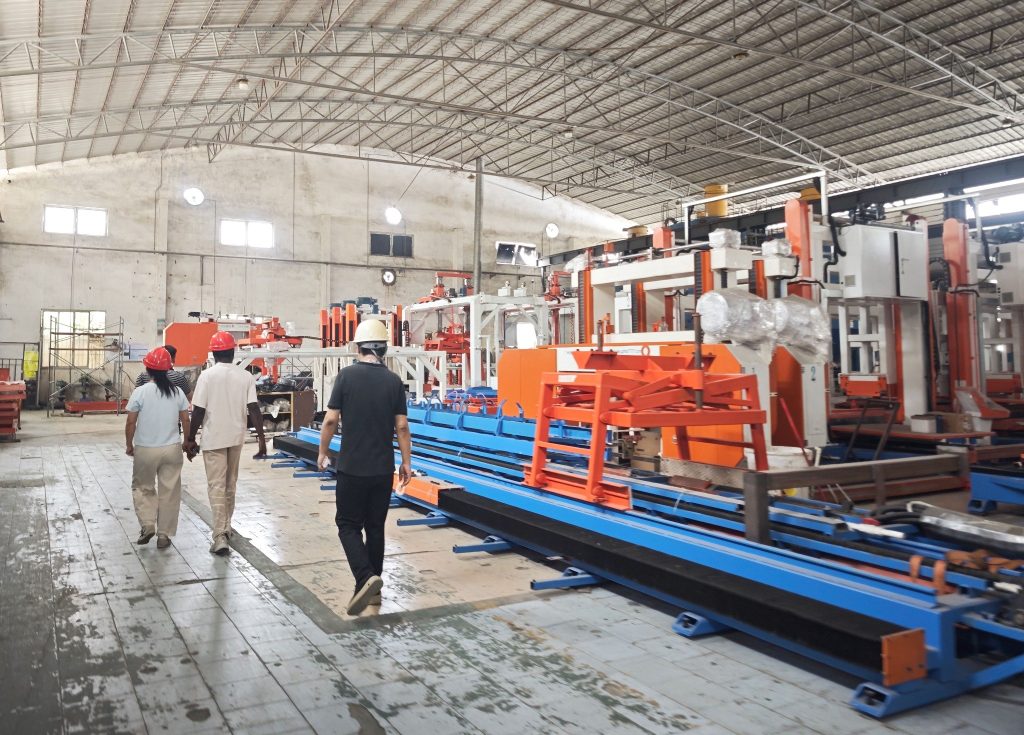
Transfer Conveyor Planning for Continuous Output is an important topic for investors, contractors and building material producers who are preparing a lightweight materials factory. A transfer conveyor system is not only a group of machines. It is a complete production process that should match the product, raw materials, daily capacity, workshop space and future service plan.
Guangzhou Hengde Building Technology Co., Ltd. works around turnkey lightweight block and wall panel factory solutions. The purpose of this article is to explain the practical points behind mould return, ferry car movement, conveyor connection and production rhythm. The content is written for overseas customers who want a clearer technical discussion before sending an inquiry, not for exaggerating equipment performance or promising unrealistic returns.
Start from the product, not only the machine
Before choosing equipment, the customer should first confirm what product will be sold in the local market. CLC blocks, lightweight partition panels, EPS lightweight blocks and other lightweight concrete products may share some process ideas, but their equipment configuration is not the same. Product size, density, strength target, curing method and handling method all affect the final line design.
For this reason, Hengde normally discusses plant dimensions, planned line direction, automation level and mould quantity before preparing a formal scheme. These details help the technical team avoid a common mistake: quoting a machine that looks suitable in photos but does not match the actual site. A clearer first discussion usually saves time during layout design, delivery planning and installation preparation.
How the production process connects
A lightweight materials line needs stable connection between storage, metering, foaming, mixing, pouring, curing, demoulding, cutting and handling. The relationship between these sections is more important than the size of one individual machine. If batching is unstable, the mixer cannot produce consistent slurry. If mould circulation is not planned, curing space may become a bottleneck. If the block body is not in suitable condition, the cutting system cannot show its full value.
When reviewing mould return, ferry car movement, conveyor connection and production rhythm, the layout should be considered together with operators and maintenance access. Overseas projects often face different workshop sizes, power conditions, climate, raw material quality and labor arrangements. A practical factory solution should leave enough space for loading, cleaning, inspection and future adjustment.
Why real source material matters
For the official international website, the images should come from real Hengde equipment, workshop photos, delivery photos, layout drawings and project materials. The website should not use stock photos or AI-created factory scenes. Overseas buyers of production lines normally want to see what the equipment actually looks like and whether the supplier understands the complete process.
The featured image assigned to this article is a general real Hengde material image. It should not be described as a specific customer project unless the case source has been manually confirmed. This rule is especially important for project cases, because a wrong photo may reduce trust even when the written case content is correct.
Information needed for a serious inquiry
Customers can improve communication speed by sending the destination country, expected daily capacity, target product size, raw material situation, available factory area, local voltage and whether installation guidance is required. Photos or short videos of the site and raw materials are also useful. For existing factories, it is helpful to explain the current bottleneck, such as cutting speed, mould circulation, manual handling or product consistency.
Hengde can then respond with a more relevant direction: a simplified line, a standard line, a wall panel configuration, a CLC block configuration, a cutting system upgrade or a customized handling system. The goal is not to sell the largest configuration, but to match equipment to the factory stage and product plan.
Practical conclusion
A well-planned transfer conveyor system should be built around real production needs. Good website content should help customers understand the production logic before they ask for a quotation. With clear photos, accurate alt text, practical explanations and a conservative tone, the new Hengde international website can support Google SEO, Google Ads landing pages and higher-quality overseas inquiries.
Editorial note: This draft should be reviewed by the Hengde sales or technical team before publishing. Add customer names, countries or project dates only when the matching source material has been confirmed.