What to Check When Visiting a Lightweight Block Equipment Factory
Management View — reviewed by the engineering and project-delivery team. A factory visit can be one of the most valuable days in an equipment project. It can also become a long photo session that proves very little. The difference is preparation. Walking past a large machine does not show whether it matches the buyer's product. A clean sample does not show which material, recipe or cutting condition produced it. A control screen does not show that the complete process can repeat. A signed order on the wall does not prove the current stage of that project. A serious visit should connect the buyer's project questions…
Management View — reviewed by the engineering and project-delivery team.
The difference is preparation.
Walking past a large machine does not show whether it matches the buyer’s product. A clean sample does not show which material, recipe or cutting condition produced it. A control screen does not show that the complete process can repeat. A signed order on the wall does not prove the current stage of that project.
A serious visit should connect the buyer’s project questions to evidence that can be examined on the factory floor.
Bring a project brief, not only a camera
Before the visit, the buyer should prepare the destination country, target product, proposed raw materials, expected output basis, available factory dimensions, voltage and current project stage.
The purpose is not to lock every parameter early. It is to give the visit a reference point. Without that brief, the supplier can only show what is available. With it, both sides can ask whether the visible equipment belongs in the proposed process.
The factory-planning enquiry is useful as a pre-visit checklist because it forces the product, materials, site and timeline into the same discussion.
First prove the process connection
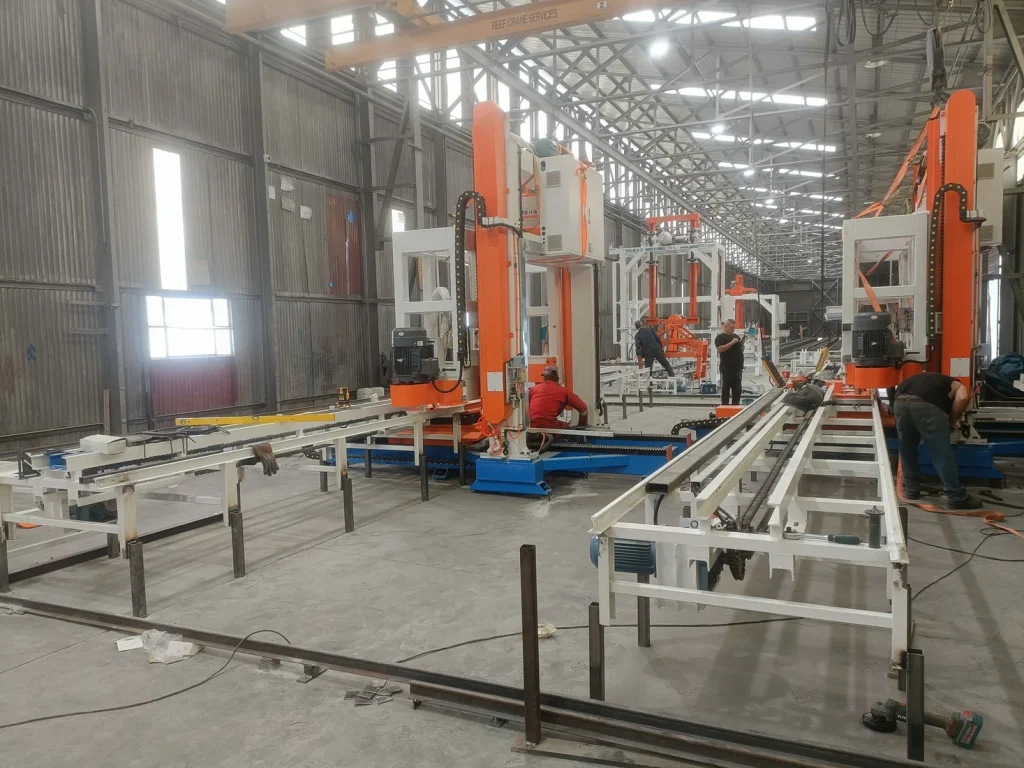
The buyer should ask the supplier to explain the complete sequence from material preparation to finished-product handling. Then inspect the interfaces between stages.
Where does each material enter? How is it measured? How does the mould move?
Where does the block body wait? How is it transferred into cutting? What happens immediately after cutting?
Where can an operator clean, inspect and maintain the equipment?
These transitions are often more important than the appearance of the individual machines. A beautiful cutter cannot compensate for an unstable billet transfer. A large mixer cannot compensate for insufficient mould circulation.
Compare the explanation with the complete production-line overview and ask which modules are standard, which are optional and which are project-specific.
Ask what the cutting evidence really proves
Cutting attracts attention because the result is visible. The buyer should still separate four different kinds of evidence:
- A loose finished sample proves only that a sample exists.
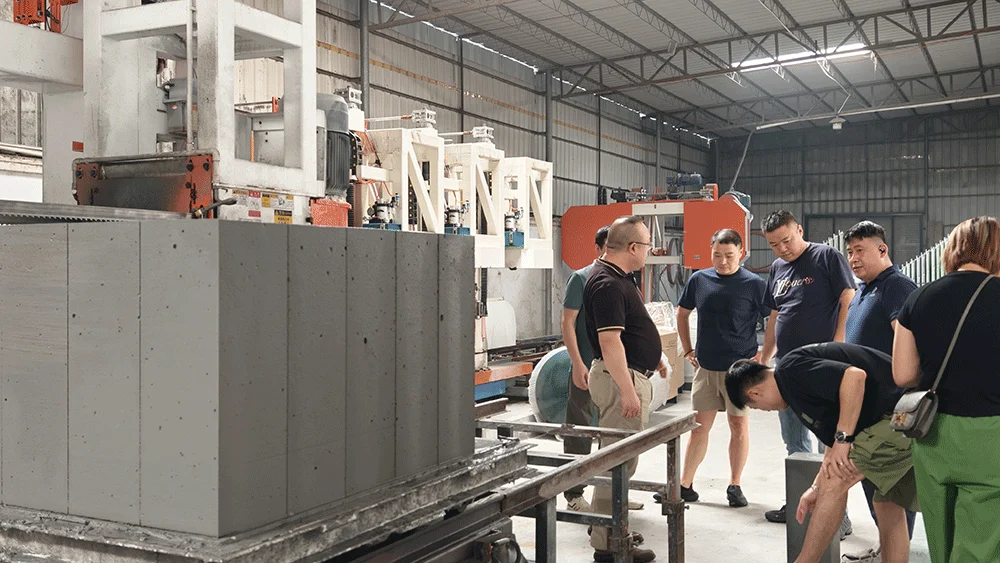
- A photograph of a block body in a cutter proves that the equipment and product were present together.
- A continuous video can show the movement and sequence of a particular cycle.
- Repeated measurements and production records are needed to assess consistency.
During a live or recorded demonstration, ask about the material, density target, body age at cutting, dimensions, wire arrangement and measurement method. Inspect the product after it leaves the cutter, not only while it is inside the machine.
The cutting-system page should help identify the machine type, but the visit must connect it to the buyer’s intended product and process window.
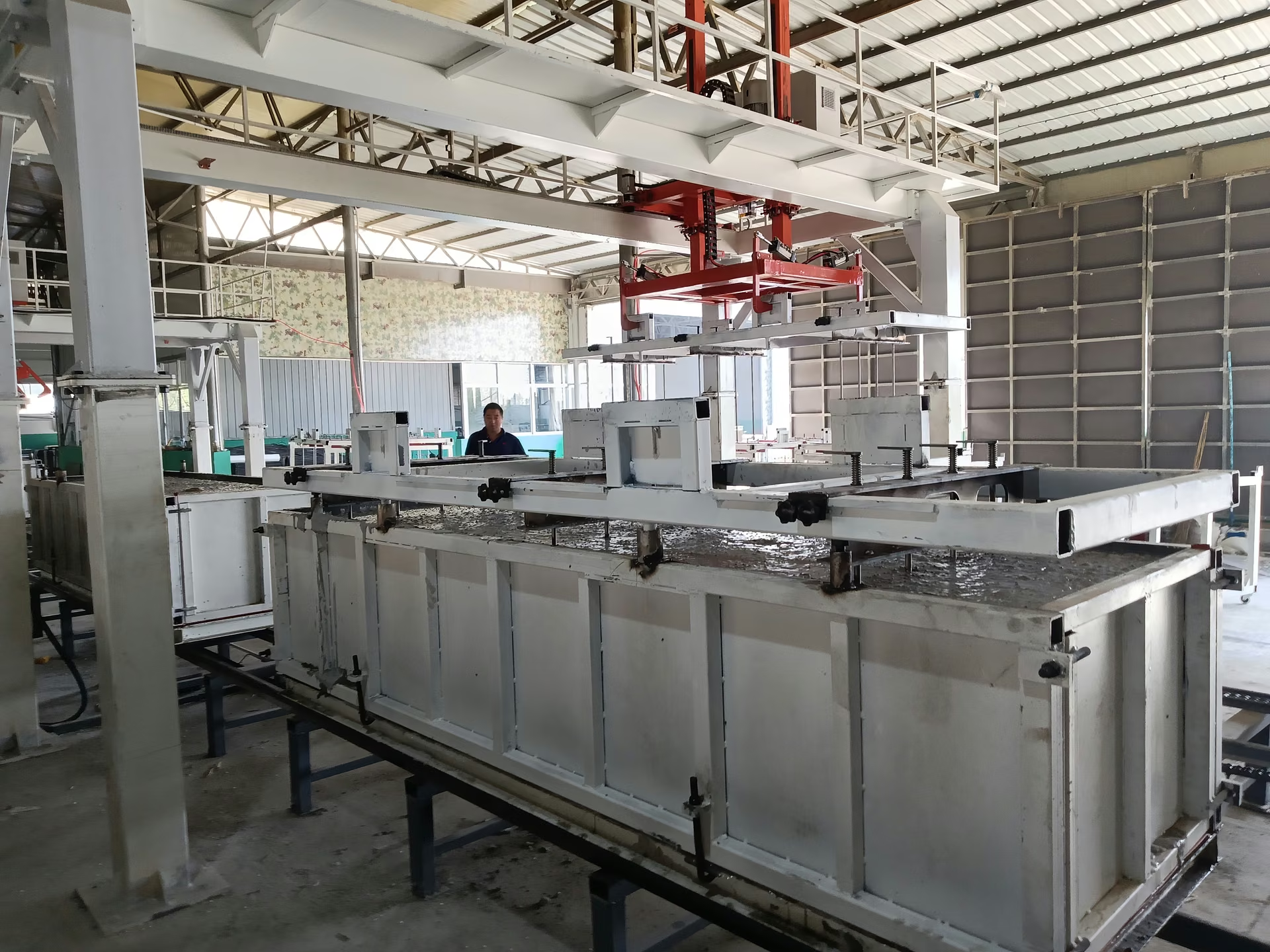
Inspect the machine when it is stopped
Movement is impressive. Maintenance happens when the line is stopped.
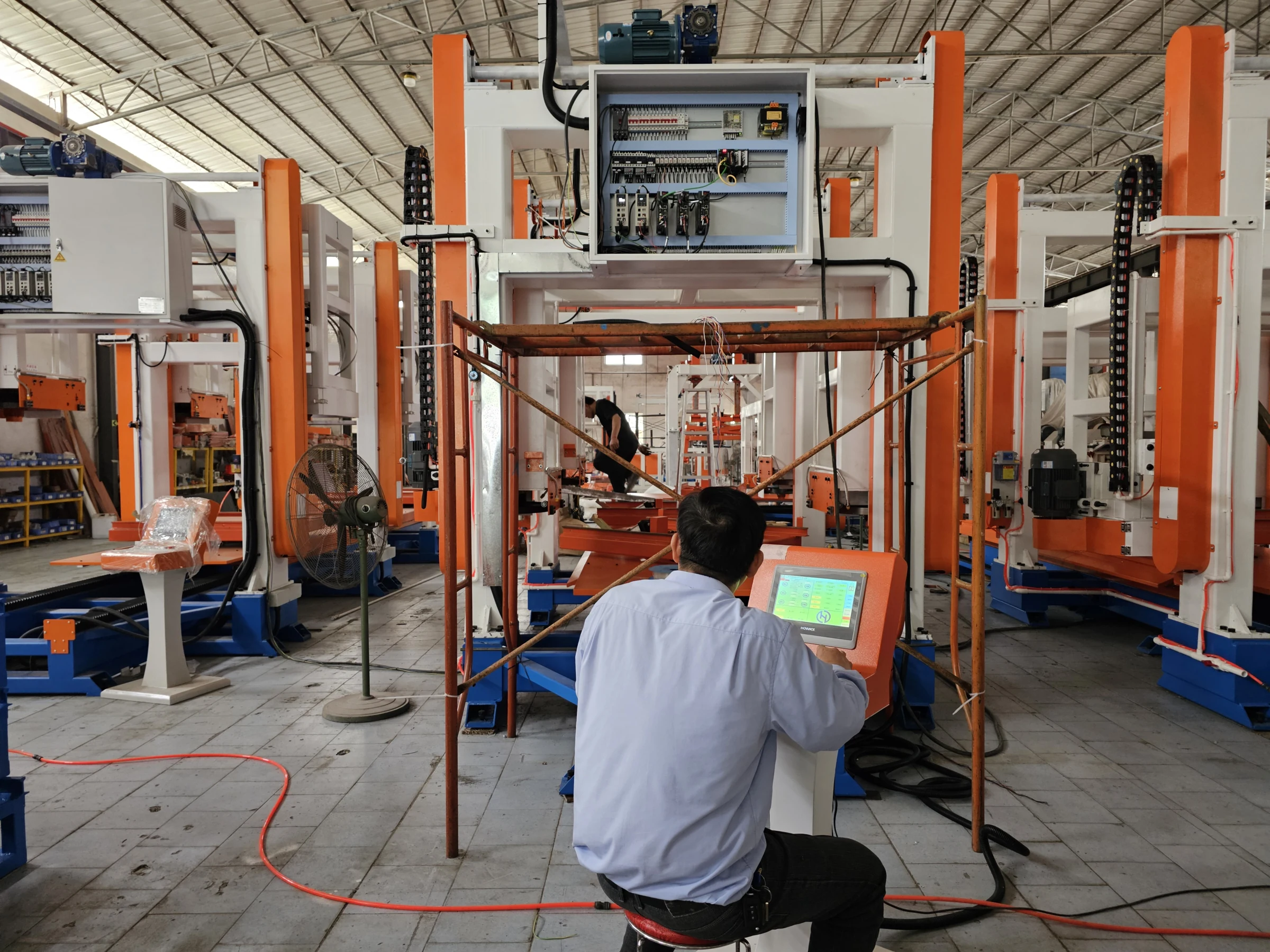
Open the access points that an operator is expected to use. Check whether common wear parts can be reached safely. Ask how wires, bearings, seals, sensors, pumps and drives are inspected or replaced. Look for space around the equipment, not only the equipment footprint.
Ask which parts are standard industrial components and which are supplier-specific. Ask what spare-parts package is proposed for commissioning and the first operating period. A low purchase price can become expensive if a small proprietary part has a long delivery time.
Match the drawing to the floor
A useful factory visit should include a drawing review after the equipment inspection.
The buyer can then ask practical questions: Does the shown maintenance clearance exist in the proposed layout? Is the transfer direction correct? Can the mould pass the building columns?
Where will the operator stand? How will the largest component enter the workshop? Where do water, power, compressed air and drainage connect?
The drawing does not have to be final. It should be detailed enough to show that the supplier understands the relationship between the machine and the building.
Separate project evidence by stage
Many factories display customer photographs. The buyer should ask what stage each image represents.
- a meeting photograph: discussion or review;
- a signed document: agreement, if publicly confirmed;
- manufacturing photographs: equipment production;
- loading photographs: shipment preparation or dispatch;
- site photographs: civil work or installation;
- operating video: commissioning or production, depending on context.
One stage should not be used to claim another. This protects the buyer as much as the supplier. It creates a record that can later be compared with the agreed delivery process.
the documented project record’s project-service process separates engineering, manufacturing, shipment, installation and training because each stage has different evidence and responsibilities.
End the visit with an unresolved-questions list
The best outcome of a factory visit is not complete certainty. It is a shorter and clearer list of what still needs to be verified.
Typical open items include local material samples, product standards, site dimensions, civil interfaces, power conditions, output basis, installation scope and operator training. Assign each item to a person, document or test before the commercial scope is finalised.
Our management view
A factory visit should reduce project risk, not only increase confidence.
Confidence built from appearance fades quickly when engineering begins. Confidence built from traceable evidence becomes a working project plan. Buyers should arrive ready to ask how the line connects, how the product is verified, how the equipment is maintained and how the proposed layout fits their site.
If you plan to visit the equipment factory, send your project brief before the meeting. We can prepare the relevant equipment, drawings, samples and questions so that the visit focuses on the decisions that matter before a contract.
Final capacity, process and equipment configuration require project-specific engineering verification.
REAL HENGDE REFERENCE
Equipment, project or engineering evidence
Discuss your production line project with HENGDE.
Share your product, project location, target output and available materials with the HENGDE team.
Discuss Your Project