How Pore Structure Affects Foamed Concrete Density and Strength
Density is one of the first numbers discussed in a foamed-concrete project. It affects material consumption, handling and expected product properties. But density is not a complete description of the material. Recent research makes the distinction clear. A 2026 Scientific Reports study evaluated an ultra-lightweight foamed-concrete system through fresh behaviour, transport properties, mechanical performance, pore organisation and thermal properties—not density alone. A 2025 study in Infrastructures found that the production technique significantly affected pore-size distribution and, in turn, water absorption, mechanical behaviour and durability-related results. The practical message for a factory is straightforward: hitting a density target is necessary, but it does not prove that…
Density is one of the first numbers discussed in a foamed-concrete project. It affects material consumption, handling and expected product properties. But density is not a complete description of the material.
Recent research makes the distinction clear. A 2026 Scientific Reports study evaluated an ultra-lightweight foamed-concrete system through fresh behaviour, transport properties, mechanical performance, pore organisation and thermal properties—not density alone. A 2025 study in Infrastructures found that the production technique significantly affected pore-size distribution and, in turn, water absorption, mechanical behaviour and durability-related results.
The practical message for a factory is straightforward: hitting a density target is necessary, but it does not prove that the internal pore structure is stable or that the finished product meets its other requirements.
Why similar density can produce different results
Foamed concrete contains a cementitious matrix and a deliberately introduced air-void system. The voids can differ in size, shape, distribution and connectivity. Large or connected pores can create easier paths for water and can weaken local sections of the matrix. A finer, more even distribution may behave differently even when the overall dry density is similar.
Segregation adds another problem. If the foam, slurry and solid particles are not balanced, the top and bottom of a mould may not have the same structure. A single density measurement can miss that variation.
This is why product evaluation may need density, dimensional checks and strength tests together with application-specific properties. The required test set should be defined by the target market and product use.
Production control begins before pouring
Pore structure is influenced by the condition of the base slurry and the foam entering it. Water dosage, binder behaviour, fine-material grading, slurry viscosity, foam density, mixing intensity, mixing time and the delay before pouring can all affect the result.
On a production line, those factors should be converted into a repeatable operating window. Operators need clear batch steps, calibrated water measurement, a consistent foam-generation procedure and a defined mixing sequence. If ambient temperature or material temperature changes significantly, the team should record it and check whether setting and foam stability also change.
Checks that can be used on the factory floor
Not every useful control requires advanced microscopy. A practical routine can include:
- verifying water and solid-material dosage for each batch;
- checking foam condition and density at an agreed frequency;
- recording fresh slurry or wet-cast density;
- controlling the time from foam production to mixing and pouring;
- comparing samples from different mould positions;
- recording demoulding and cutting behaviour;
- linking finished-product test results back to the batch record.
These checks do not replace accredited product testing. They help the factory identify when the process is moving away from the condition that produced an accepted result.
Do not copy a laboratory formulation directly
The 2026 study investigated a specific organosilicon additive, materials, density range and curing programme. Its reported optimum belongs to that experimental system. It should not be copied as a universal factory recipe.
Local cement chemistry, mineral materials, foaming agent, water, mixer, mould size and curing environment can change the outcome. The responsible way to use research is to extract a question—such as whether pore organisation and water resistance can be improved—and then run controlled trials with the actual project materials.
What this means for equipment selection
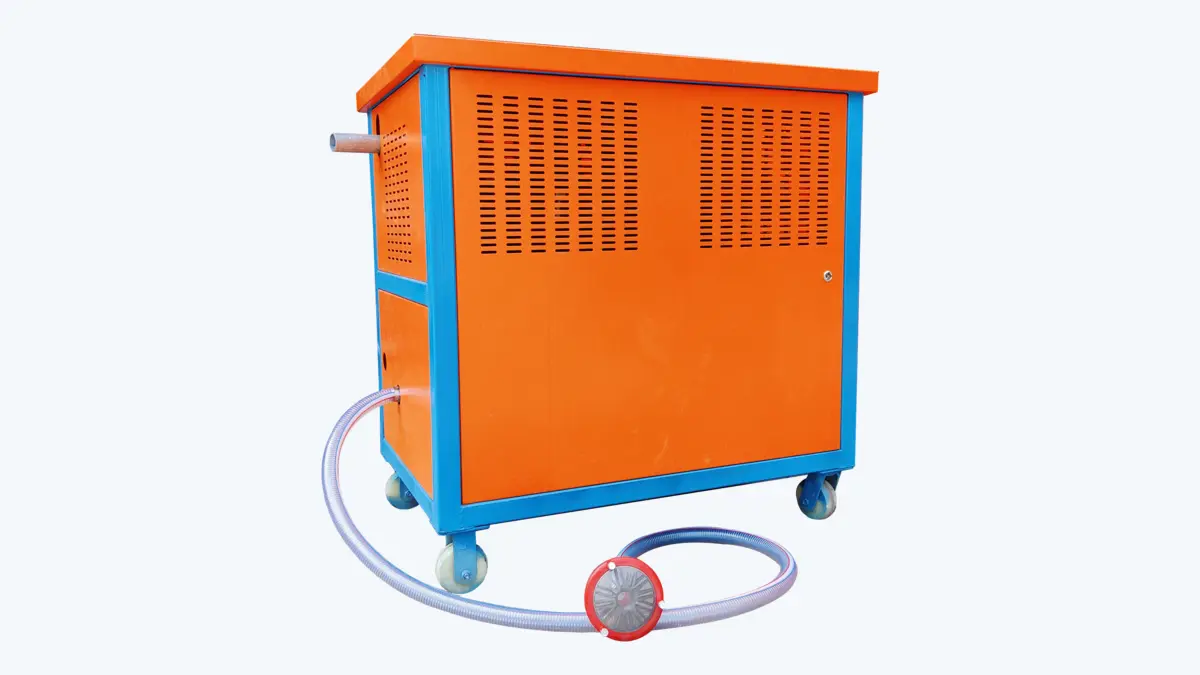
A project needs more than a foam generator with a stated output. It needs a controllable chain: material dosing, water measurement, slurry preparation, foam production, mixing, transfer, pouring, curing and cutting. The equipment configuration should support sampling and adjustment rather than locking the project into an untested assumption.
Hengde’s project workflow starts with local raw-material information and the target product. That gives the technical team a basis to plan trials, define control points and connect them to line layout and operator procedures. Contact Hengde to discuss your raw materials and product requirements.
Research sources
- Scientific Reports (2026) — Performance optimization of ultra-lightweight foamed concrete using a dimethicone-infused organosilicon compound
- Infrastructures (2025) — The Impact of Production Techniques on Pore Size Distribution in High-Strength Foam Concrete
Research translation note: This article explains production implications. It does not reproduce the cited formulation, promise the same results with other materials or replace local product testing.
Final capacity, process and equipment configuration require project-specific engineering verification.
REAL HENGDE REFERENCE
Equipment, project or engineering evidence
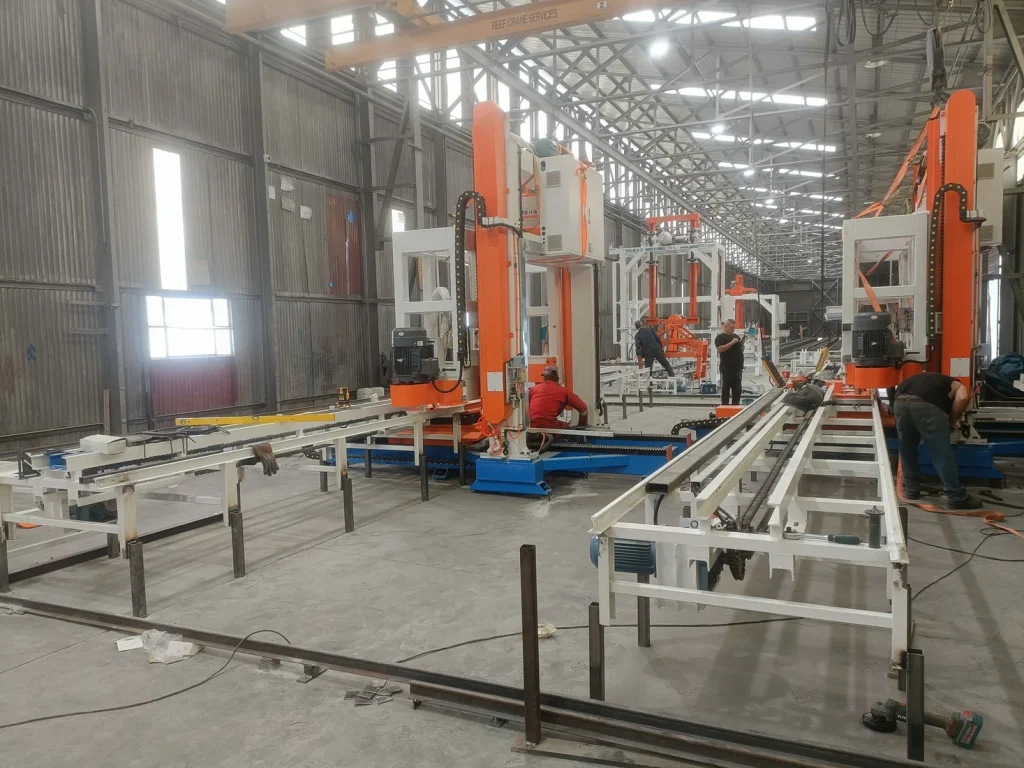
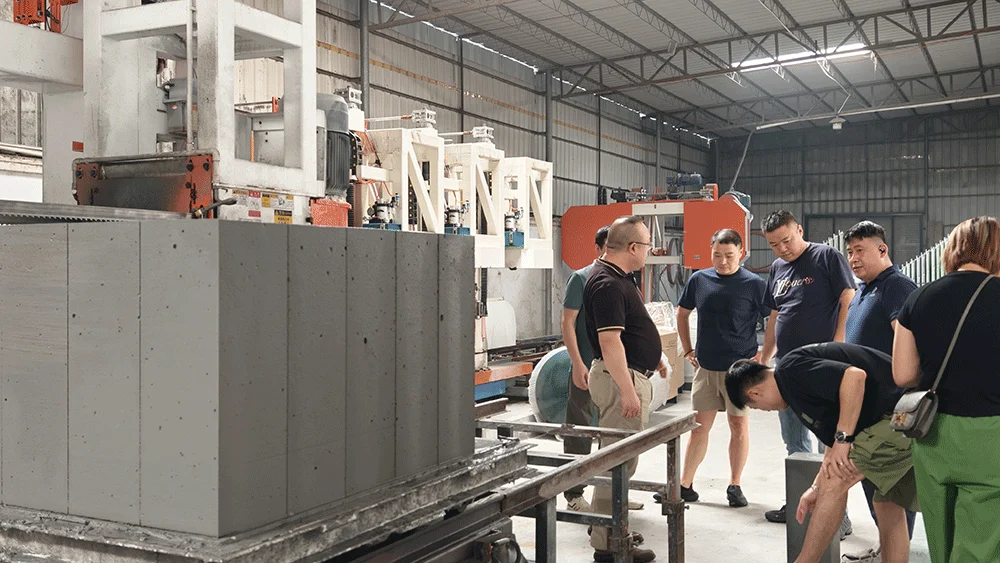
The real HENGDE media shown in the article Hero is the primary visual reference for this guide. Configuration details remain project-specific.
Discuss your production line project with HENGDE.
Share your product, project location, target output and available materials with the HENGDE team.
Discuss Your Project