How Building Costs Affect Lightweight Block Plant Investment in Ghana
Ghana’s June 2026 Prime Building Cost Index release gives investors a more current reference point for construction planning. Ghana Statistical Service published the June bulletin and supporting materials, while reporting based on the release placed year-on-year building-cost inflation at 3.1%, up from 2.7% in May. The number is encouraging from a planning perspective, but it should not be read as “a factory project is now cheap” or “all input risks have disappeared.” A production-line decision has a different cost structure from a single building contract. It includes imported equipment, freight, inland transport, civil works, electrical installation, spare parts, commissioning time, raw-material trials and working capital.
Ghana’s June 2026 Prime Building Cost Index release gives investors a more current reference point for construction planning. Ghana Statistical Service published the June bulletin and supporting materials, while reporting based on the release placed year-on-year building-cost inflation at 3.1%, up from 2.7% in May.
The number is encouraging from a planning perspective, but it should not be read as “a factory project is now cheap” or “all input risks have disappeared.” A production-line decision has a different cost structure from a single building contract. It includes imported equipment, freight, inland transport, civil works, electrical installation, spare parts, commissioning time, raw-material trials and working capital.
Separate the market signal from the project budget
A national index helps an investor understand direction. A bankable plant budget still needs quotations and assumptions tied to a named site and a defined product.
For example, the investor should separate costs into four groups: production equipment, local civil and utility work, delivery and installation, and pre-production working capital. Each group is exposed to different risks. Steelwork and electrical items may not move in the same way as local labour.
Ocean freight and exchange rates may change between quotation and shipment. A project that combines everything into one untested number is difficult to control.
Build the first phase around real demand
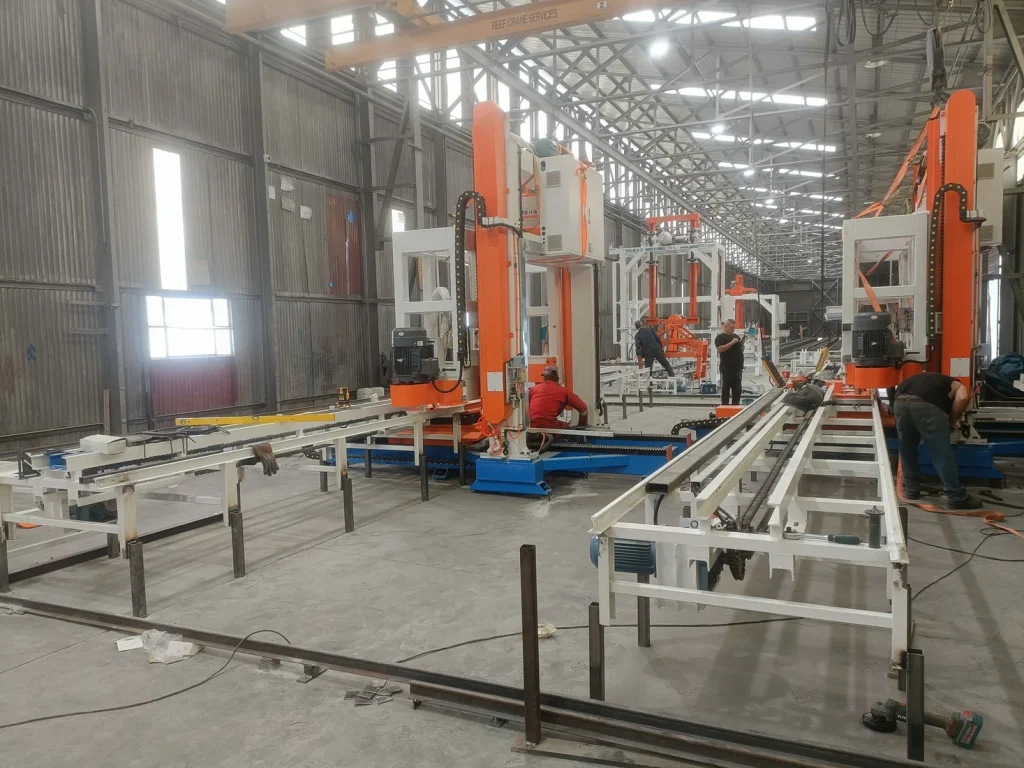
For a new lightweight-block or wall-panel business, Hengde’s preference is to match the first phase to demand that can be explained customer by customer. That may come from a developer’s own projects, distributor commitments, contractor trials or a quantified replacement opportunity in a defined region.
The first-phase layout should still protect the future. Space for additional mould circulation, cutting capacity, curing positions, material storage and finished-product handling can be reserved even when those items are not all purchased on day one. This is different from buying an oversized line and hoping the market catches up.
Raw-material trials belong in the investment model
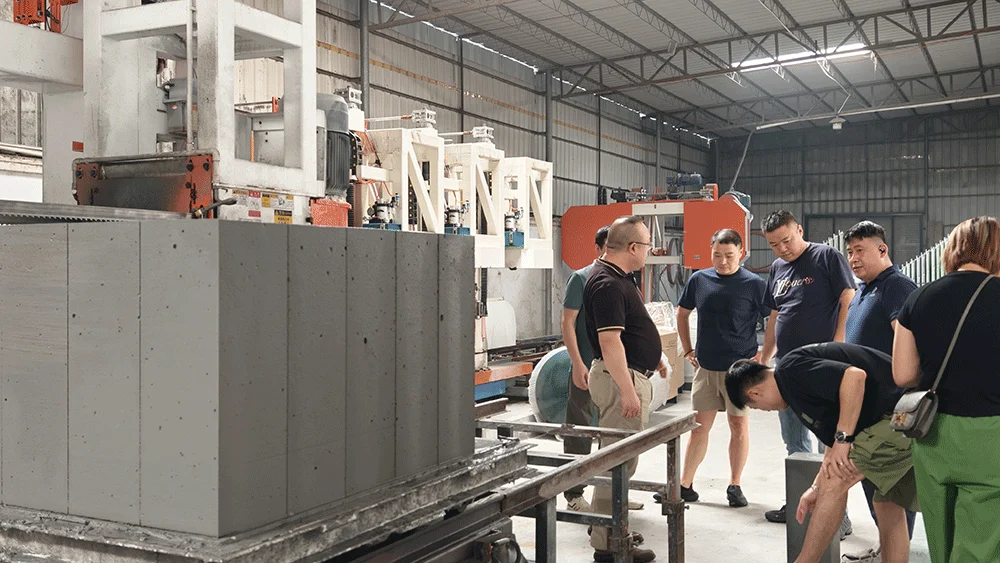
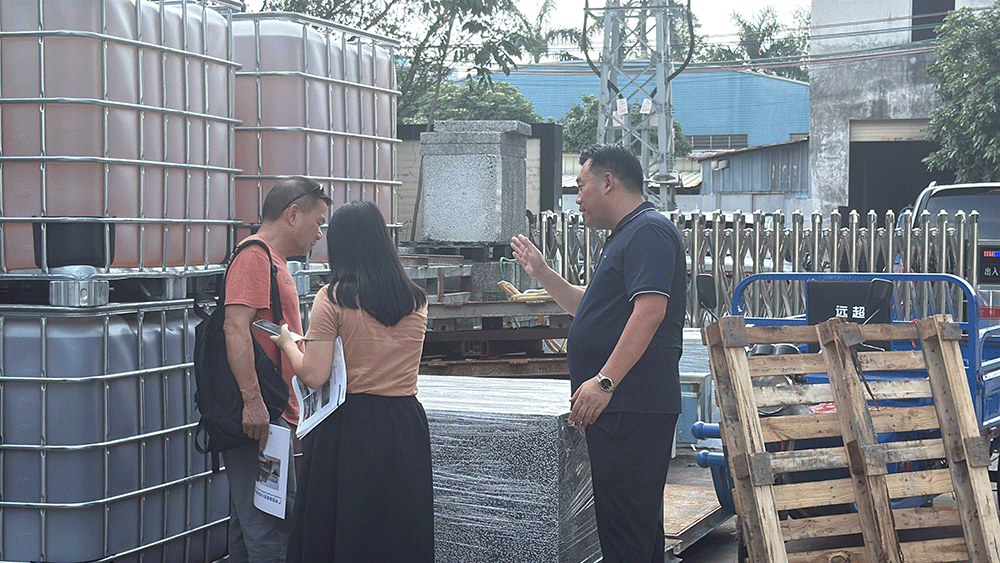
Local material behaviour can change production cost and commissioning time. Cement consistency, sand or mineral-material grading, water quality and foam stability affect density control, setting, demoulding and cutting. Samples should be evaluated before the final process is promised.
Trial results also affect commercial planning. If a formulation requires more binder, longer curing or tighter water control than expected, the cost per cubic metre and daily output assumption must be updated. This is why raw-material testing is not just a laboratory task; it is part of the financial model.
Delivery is a milestone, not the finish line
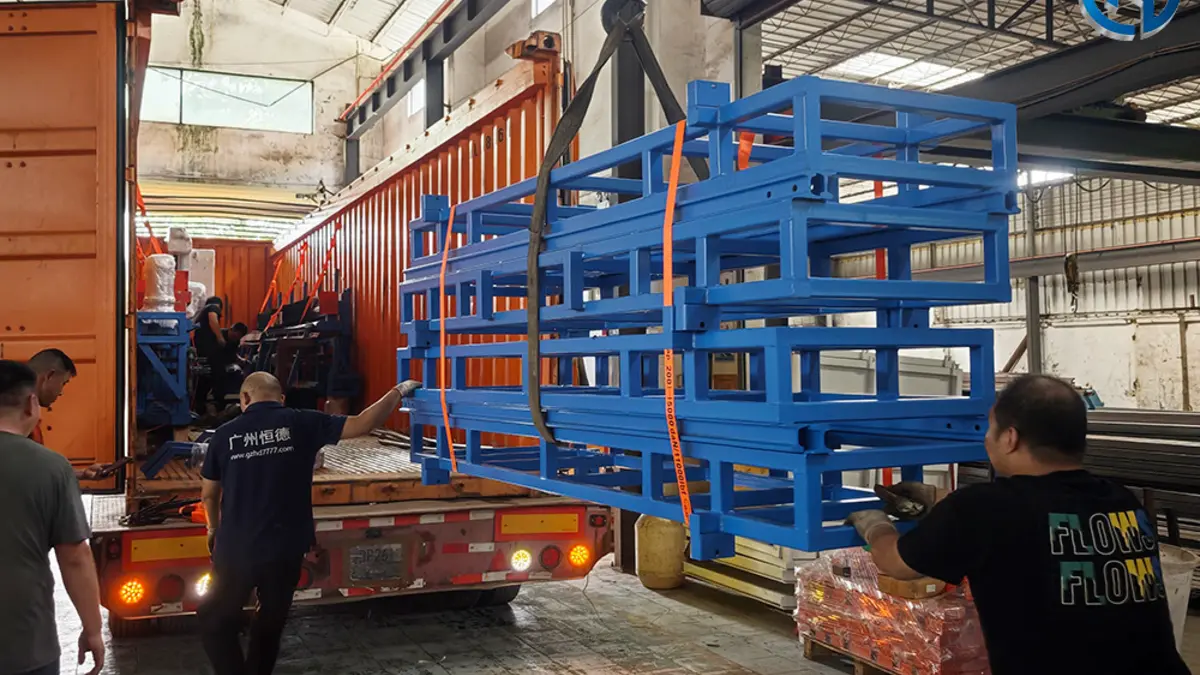
Hengde’s documented Ghana shipment shows what a physical delivery milestone looks like: equipment is checked, loaded and prepared for transport to the project site. It does not by itself confirm installation, trial production or commercial output. Those later stages require site readiness, engineer coordination, operator training and recorded acceptance tests.
That distinction matters when investors compare suppliers. The purchase price should be evaluated together with layout support, manufacturing records, packing lists, installation responsibilities, commissioning criteria, training and after-sales access.
The general manager’s conclusion
Ghana’s latest cost data is useful, but it is not a substitute for a site-specific plan. The safer investment sequence is: verify demand, test local materials, define the product, freeze the site interfaces, purchase the right first phase and reserve a clear route to expand.
Hengde can review these inputs as one project package—from raw-material testing and plant layout to manufacturing, installation, commissioning and operator training. Send the project team your target product, expected output, raw-material list and proposed site drawing to begin.
Sources
- Ghana Statistical Service — June 2026 Prime Building Cost Index release
- Citi Newsroom — report on the June 2026 PBCI results
- Hengde project record — Ghana wall-panel equipment shipment
Editorial note: Economic indicators are planning context only. They do not guarantee project cost, sales volume or return on investment.
Final capacity, process and equipment configuration require project-specific engineering verification.
REAL HENGDE REFERENCE
Equipment, project or engineering evidence
The real HENGDE media shown in the article Hero is the primary visual reference for this guide. Configuration details remain project-specific.
Discuss your production line project with HENGDE.
Share your product, project location, target output and available materials with the HENGDE team.
Discuss Your Project