High Cutting Waste and Uneven Block Sizes: Is It Time to Upgrade?
High cutting waste, uneven block sizes, wavy surfaces and repeated downtime can turn an otherwise productive lightweight-block factory into a rework operation. The right response is not always to replace the complete production line. First determine whether the problem comes from the green body, its support and transfer, the cutting machine, or the way those systems connect. This checklist helps an existing CLC, ceramsite or self-insulating block producer collect evidence and decide whether maintenance, process correction or a cutting-system retrofit is the practical next step. The featured image is an AI-generated editorial comparison. It is not a customer-site photograph, performance guarantee or final engineering design.…
High cutting waste, uneven block sizes, wavy surfaces and repeated downtime can turn an otherwise productive lightweight-block factory into a rework operation. The right response is not always to replace the complete production line. First determine whether the problem comes from the green body, its support and transfer, the cutting machine, or the way those systems connect.
This checklist helps an existing CLC, ceramsite or self-insulating block producer collect evidence and decide whether maintenance, process correction or a cutting-system retrofit is the practical next step.
The featured image is an AI-generated editorial comparison. It is not a customer-site photograph, performance guarantee or final engineering design. Real HENGDE equipment and project photographs are identified below.
Six symptoms that need more than a speed adjustment
- block dimensions drift from one side of the billet to the other;
- the cut face shows repeated waves or vibration marks;
- kerf is wider than expected and reusable material is lost;
- corners break during cutting or downstream transfer;
- the machine frequently stops for alignment or tool correction;
- operators slow the line to keep acceptable finished blocks.
A single symptom does not identify the cause. Record which product, billet position, cutting direction and operating condition produce the defect.
1. Confirm that the green body is ready to cut
A body that is too soft may drag, tear or deform. A body that has cured too far may increase cutting load and edge damage. Uneven density or incomplete mixing can produce different resistance within the same billet.
Compare cutting results at controlled curing intervals. Record material batch, density, billet dimensions, curing conditions and surface condition before cutting. If the upstream process is unstable, correct it before using cutting-machine settings to hide the problem.
2. Inspect billet support and transfer
A stable cutting frame cannot produce consistent dimensions if the billet arrives tilted, unsupported or misaligned. Check mould bases, transfer cars, rails, reference stops and clamping points. Measure the billet position before the first cut and again after transfer.
Pay particular attention to changes in level between the existing line and the proposed new machine. A retrofit must include the mechanical interface, not only the cutter itself.
3. Separate tool wear from frame or guide movement
Cutting elements, tension, guides and feed motion should be inspected as a system. Replacing a worn tool may restore a stable machine, but repeated deviation after replacement can indicate guide wear, frame movement, poor tension control or an unsuitable cutting path.
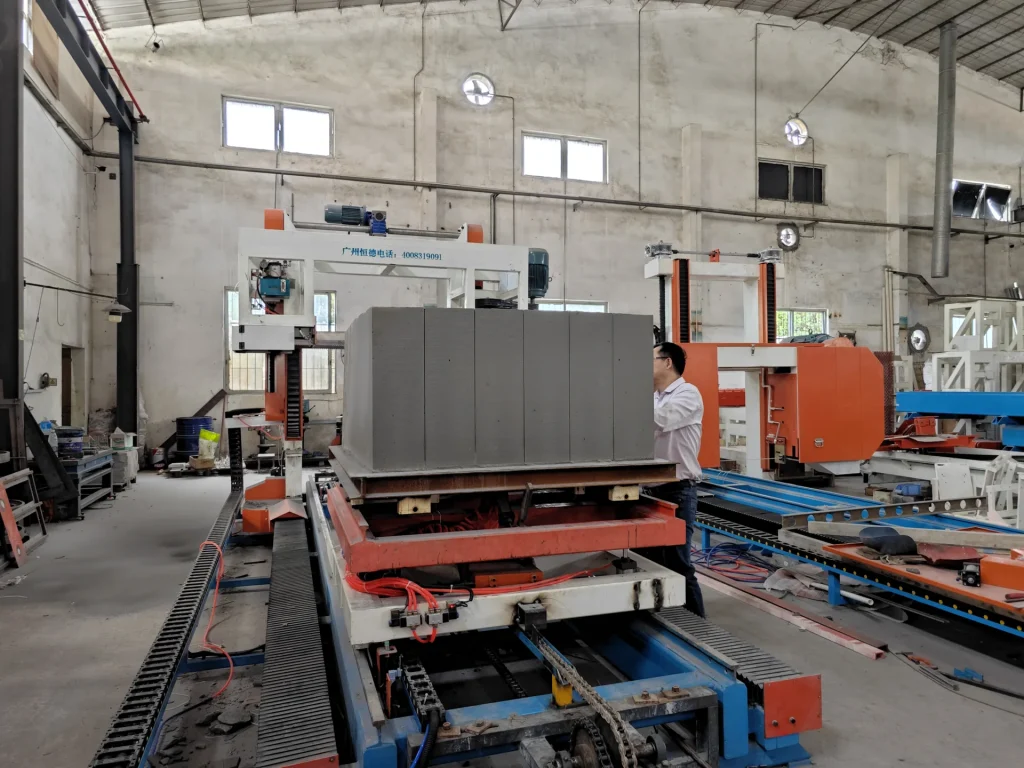
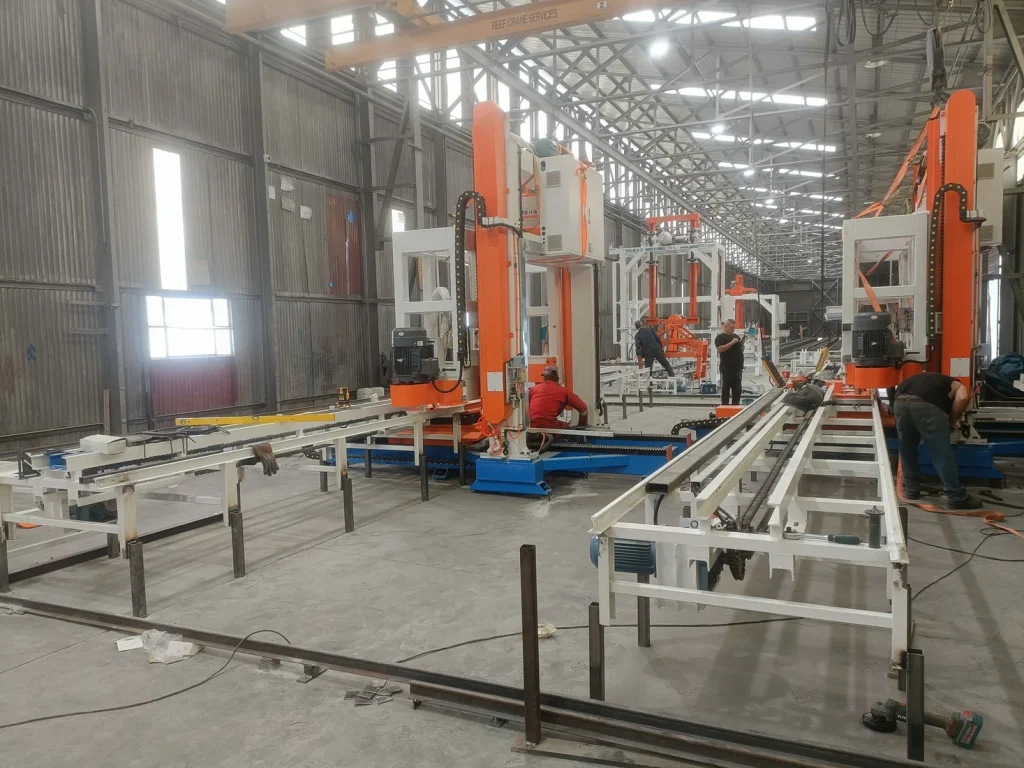
A gantry vertical cutter must still be matched to the billet size, product condition and required direction of cut. Ask the supplier to explain adjustment points, wearing parts, maintenance access and the reference method used to keep the billet and cutting frame aligned.
4. Measure loss instead of describing it as “too much”
Record billet input volume, finished saleable volume, collected cutting residue, broken products and material returned for secondary processing. Separate cutting kerf from damage created during clamping, transfer or stacking.
Measure finished dimensions at consistent points on a representative sample. Keep the actual readings, not only pass/fail totals. This shows whether the defect is random, directional or repeated at the same machine position.
5. Compare cutting cycle with the complete line rhythm
A faster cutter does not increase factory output when moulds, curing, transfer or stacking cannot supply and remove billets at the same rhythm. Conversely, a slow or unreliable cutter can become the bottleneck even when upstream equipment is stable.
Record waiting time before cutting, active cutting time, adjustment time, cleaning time and downstream blocking. Use this cycle record when reviewing the cutting and finishing system rather than selecting equipment from headline speed alone.
6. Decide whether the problem is local enough for a retrofit
A cutting-system upgrade is a strong candidate when batching, mixing, moulding and curing can already produce a repeatable green body, but cutting accuracy, reliability or material loss remains the main constraint. The existing factory must also have workable transfer routes, lifting access, power and space for installation.
A whole-line replacement may be unnecessary when the bottleneck is localised. However, a cutter-only purchase is risky if mould dimensions, base geometry, rails, controls and downstream handling are not included in the interface review.
What a retrofit survey should document
- product types, dimensions and planned future products;
- billet size, density and condition at cutting;
- existing mould base, transfer car and rail dimensions;
- cutting directions and current sequence;
- electrical supply, controls and safety interfaces;
- available installation and maintenance space;
- measured kerf, dimensional readings and reject categories;
- photos and videos of a complete operating cycle.
These records allow an engineer to define the boundary between equipment replacement, retained components and required site preparation.
Use real cut results in the acceptance plan
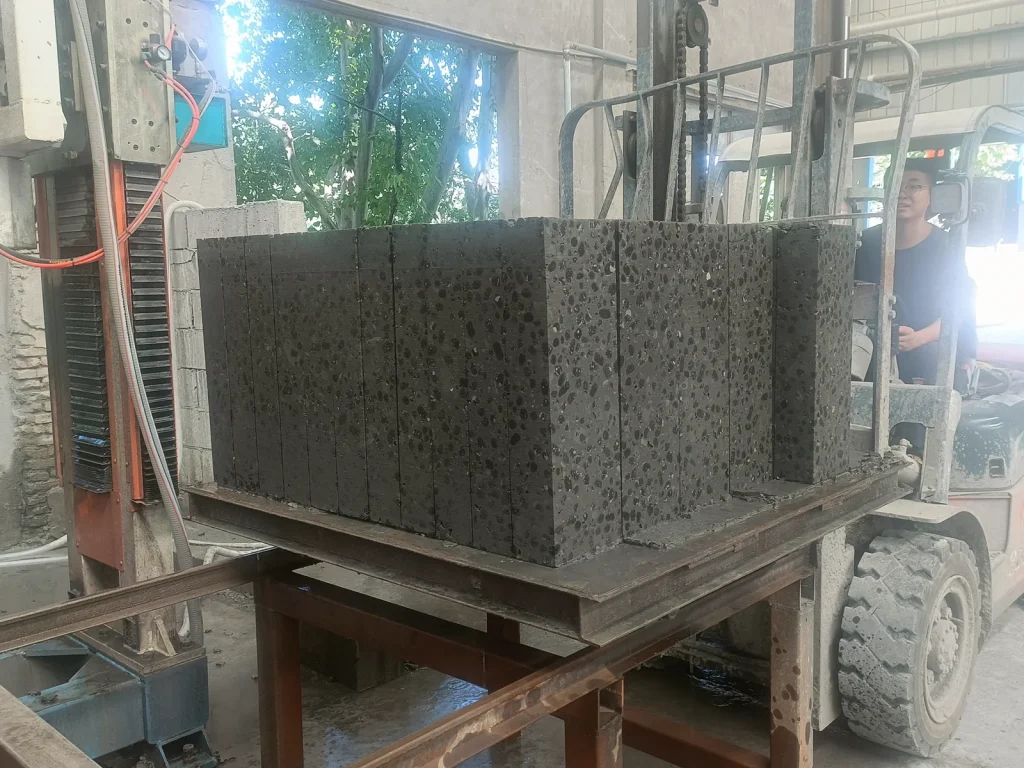
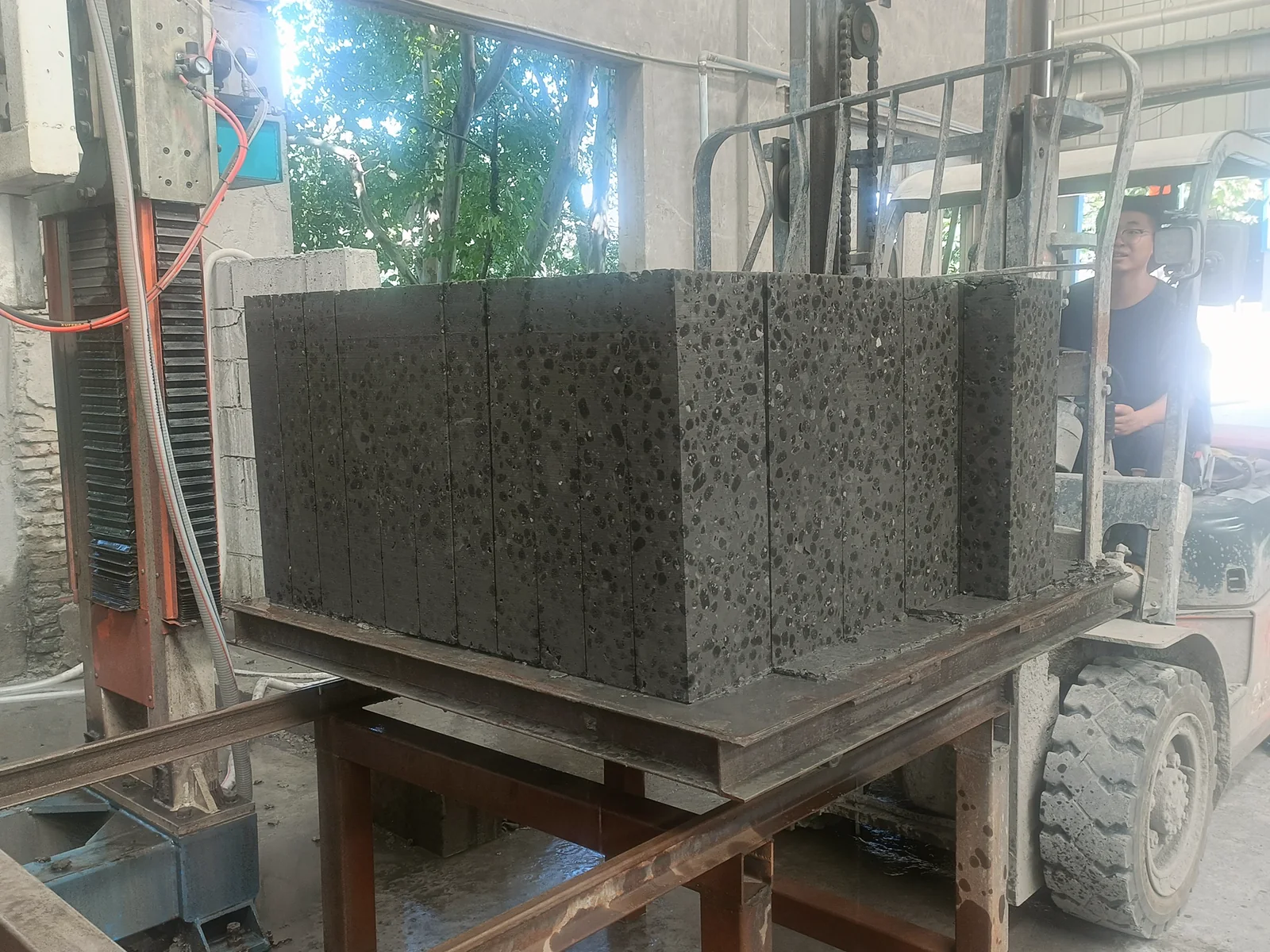
The Shaoxing ceramsite block cutting upgrade is relevant because it documents an existing-line project rather than a greenfield factory. Project photographs show the cutting equipment and actual material handled at the site.
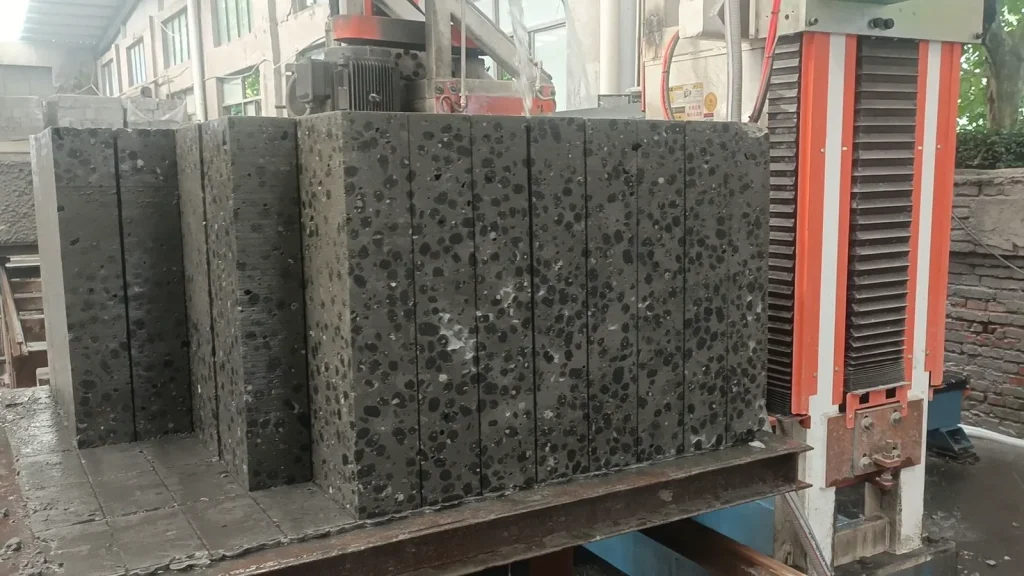
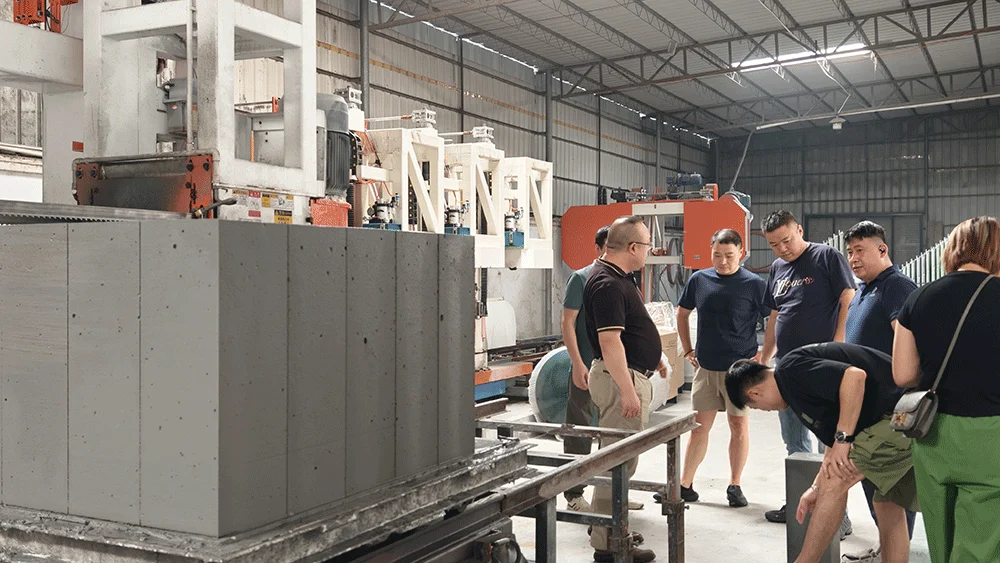
For any retrofit, acceptance should use the customer’s confirmed product and measurable criteria: target dimensions, surface condition, cutting loss, cycle stability and safe transfer. A factory demonstration with unrelated material is useful for understanding the machine, but it does not replace a project-specific acceptance plan.
How HENGDE approaches an existing-line problem
The first step is a remote evidence review: operating videos, machine and mould dimensions, product samples and production records. If the problem and interface are clear enough, HENGDE can prepare a preliminary retrofit scope. Complex projects may require an on-site survey before final engineering.
The delivery scope can then distinguish retained equipment, new cutting machinery, transfer modifications, controls, installation guidance, commissioning and operator training. This keeps the proposal focused on the real constraint instead of selling an unrelated complete line.
If your factory has high cutting loss, uneven dimensions, vibration marks or repeated downtime, send HENGDE the existing-line information and operating evidence. The engineering team can review whether maintenance, process correction or a planned cutting-system upgrade is the appropriate next action.
Final capacity, process and equipment configuration require project-specific engineering verification.
REAL HENGDE REFERENCE
Equipment, project or engineering evidence
Discuss your production line project with HENGDE.
Share your product, project location, target output and available materials with the HENGDE team.
Discuss Your Project