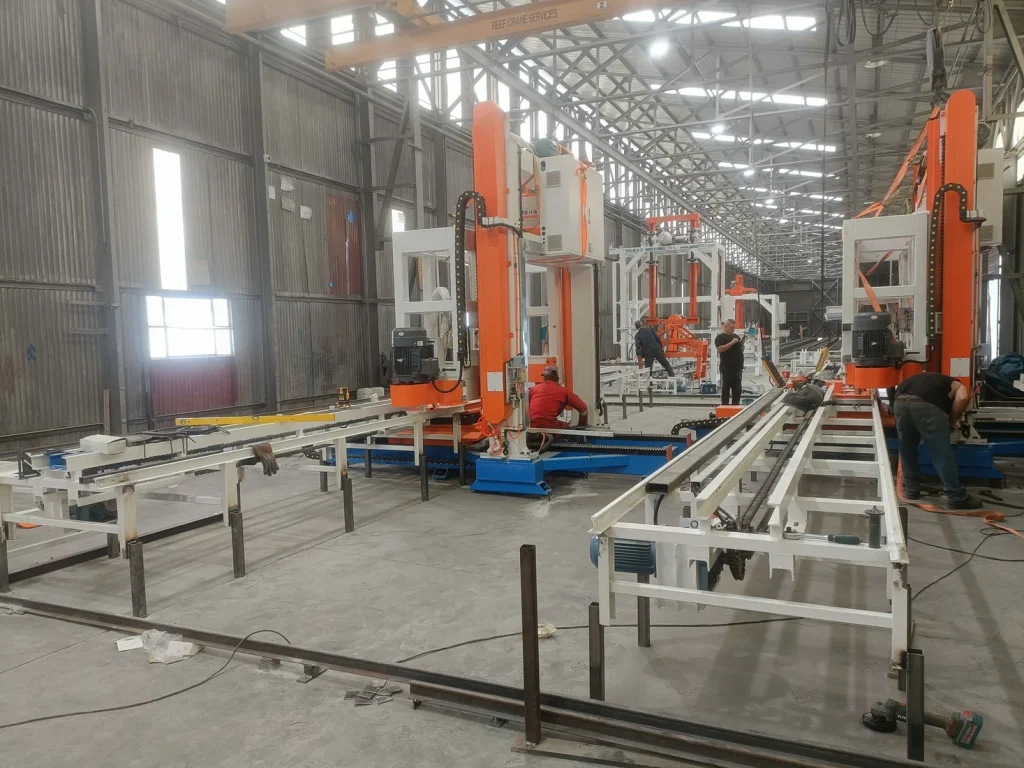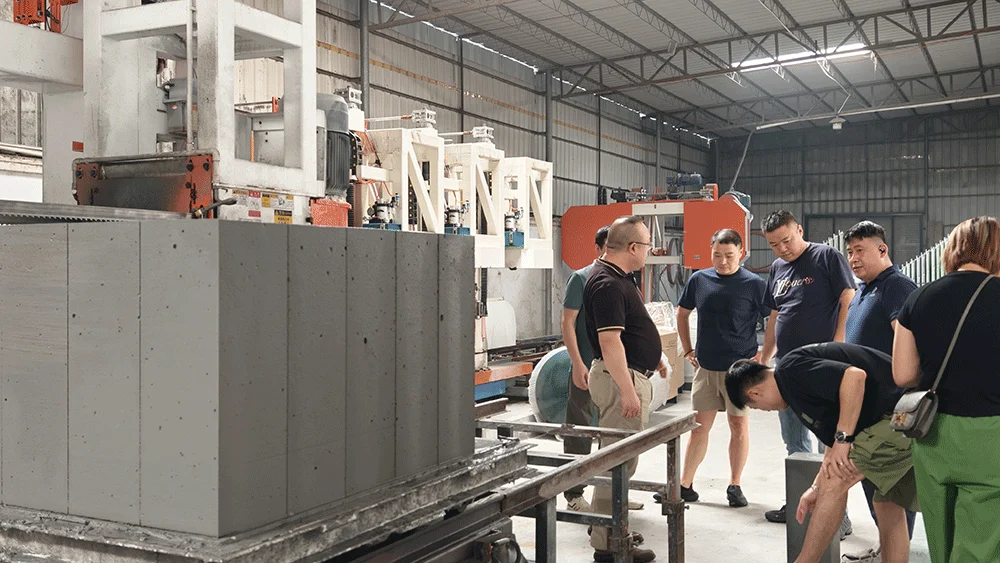
How HENGDE Band-Saw Cutting Addresses Common Reciprocating and Circular-Saw Problems
Cutting is one of the most important stages in lightweight block production because kerf width, machine stability and cutting accuracy directly affect material loss, finished dimensions and daily line availability.
Engineering Considerations
Reciprocating and circular-saw systems can work in suitable applications, but plants often look for an upgrade when they face wide kerf, unstable dimensions, chipped edges or repeated stoppages. The correct replacement should be selected from the actual green-body size, density, strength at cutting, mould format and target output.
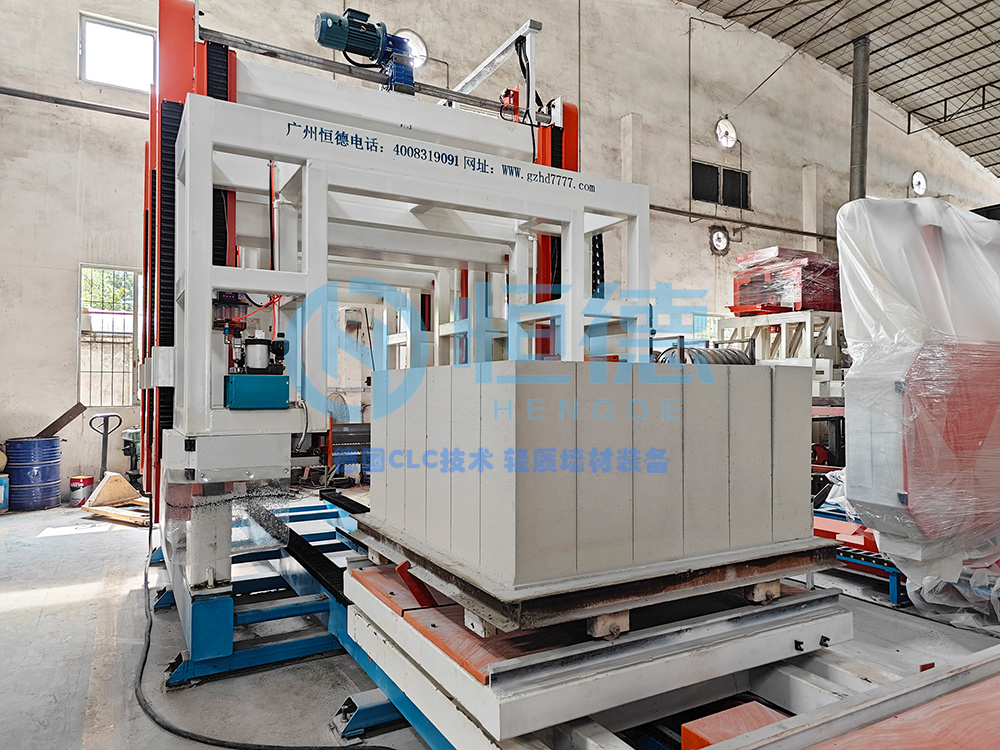
HENGDE’s band-saw-based cutting systems are designed around narrow-kerf cutting and adjustable product sizes. Depending on the project, the cutting section may include peeling, horizontal cutting, vertical cutting, transfer and stacking equipment.
Project Application
A cutting upgrade should be treated as a line-engineering task rather than a single-machine purchase. Upstream moulding, curing strength, transfer rhythm and downstream handling all influence the result.

Planning a similar lightweight block or wall-panel project? Tell us your project country, target product and planned output.
Final capacity, process and equipment configuration require project-specific engineering verification.
REAL HENGDE REFERENCE
Equipment, project or engineering evidence