Lightweight Wall Panel Production Process: From Mixing to Finished Panels
A lightweight wall panel production process is more than a block line with a different mould. Long panel geometry, reinforcement, demoulding, edge finishing and finished-product handling introduce their own equipment and control requirements. The complete route must connect material preparation with long moulds and downstream panel handling. Understanding that sequence helps an investor compare production-line proposals and identify where a “wall panel option” is only a partial add-on. The featured image is an AI-generated editorial process illustration. It is not a customer-site photograph or final engineering layout. The project photographs in the article are identified as real HENGDE media.
Introduction to the Lightweight Wall Panel Production Process
A lightweight wall panel production process is more than a block line with a different mould. Long panel geometry, reinforcement, demoulding, edge finishing and finished-product handling introduce their own equipment and control requirements.
The complete route must connect material preparation with long moulds and downstream panel handling. Understanding that sequence helps an investor compare production-line proposals and identify where a “wall panel option” is only a partial add-on.
The featured image is an AI-generated editorial process illustration. It is not a customer-site photograph or final engineering layout. The project photographs in the article are identified as real HENGDE media.
Defining the Panel and Preparing Raw Materials
Panel length, width, thickness, edge profile, reinforcement method and target performance affect the process. Product requirements also determine how samples are tested and which local standards apply.
A wall-panel line should therefore begin with confirmed product drawings and material trials. HENGDE does not publish one density or strength value for every country. The customer and engineering team first define the product, raw materials and acceptance method.
The production process starts with receiving, storage, conveying and metering. Cementitious powders, aggregates, water and approved additives must enter the mixer in a controlled sequence. Where physical foam is used, the foaming unit and air supply must be coordinated with the water and mixing system.
Material variation can change slurry viscosity, setting and the condition at demoulding. Representative local samples should be tested before the mixer, pump and dosing arrangement are finalised. See HENGDE’s raw-material assessment process for the information required at this stage.
Mixing and Transferring Slurry
The mixer must disperse the solids and foam without creating damaging segregation. Mixing order, time, water correction and discharge control all affect the slurry entering the panel moulds.
Transfer equipment must then deliver the material over the required distance and elevation. Pump and pipe selection depend on the actual slurry. Access for sampling, cleaning and maintenance should be included in the equipment arrangement.
Mould Preparation, Reinforcement and Pouring
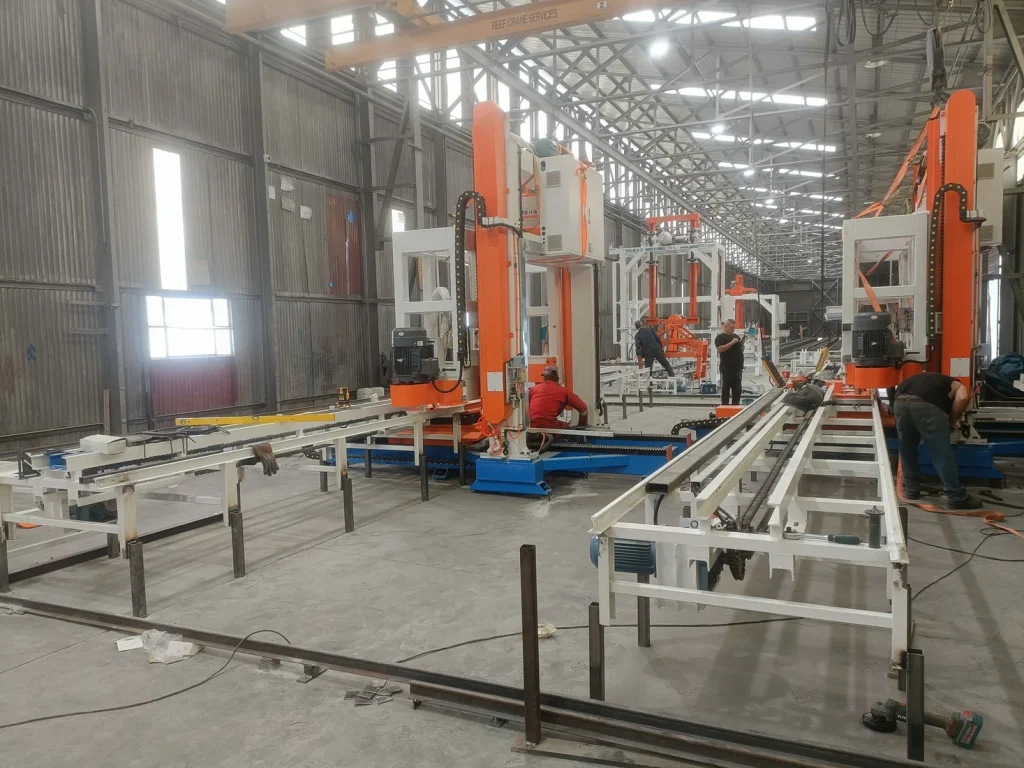
Wall panels are formed in long moulds rather than short block moulds. The mould must support the specified panel geometry and a repeatable release process. Reinforcement frames or rods, where required by the product design, must be positioned and held accurately before pouring.
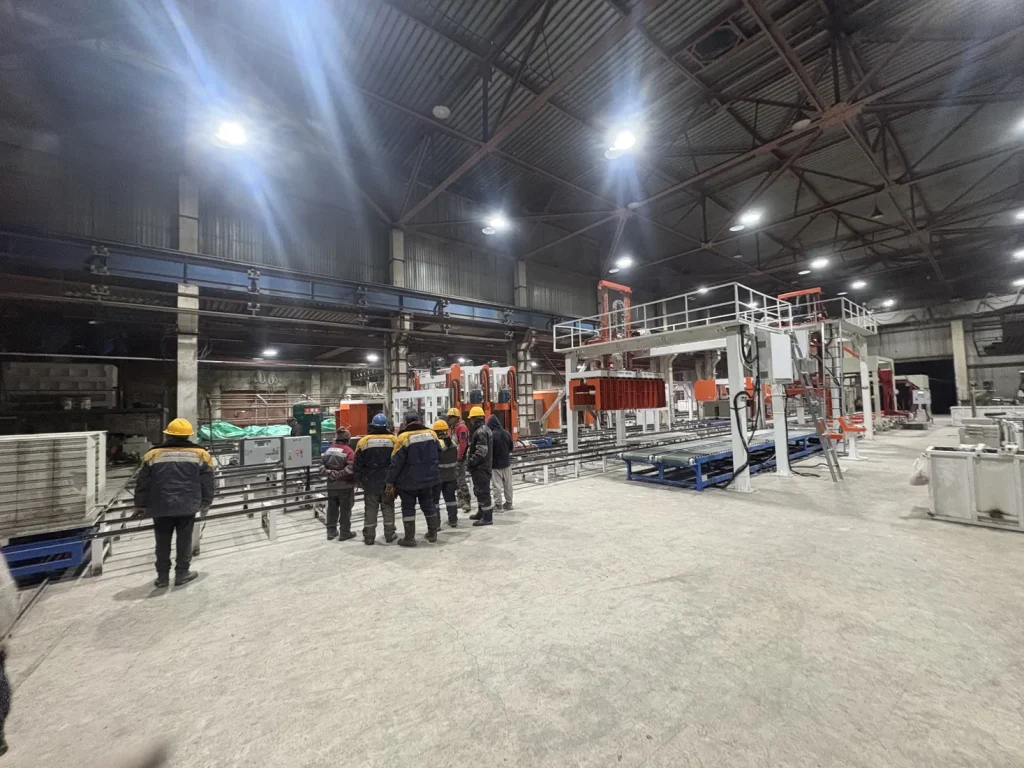
The image above is real project media from a HENGDE wall-panel installation in Mongolia. It shows why mould length, circulation space and access cannot be decided from mixer capacity alone.
Equipment can include reinforcement-rod insertion and removal systems, rod frames, transfer carts and mould accessories. Their final use depends on the approved panel design. Review the reinforcement insertion and removal equipment and related tooling pages for individual machine context.
Pouring should fill the long mould uniformly while controlling splashing, segregation and trapped voids. The line arrangement must coordinate the mixer discharge, transfer route, mould position and the time available before the slurry begins to set.
The pouring line is therefore part of a timed production sequence. The quotation should explain whether mould movement, pouring position and return movement are manual, assisted or automatic.
Curing and Demoulding
Non-autoclaved wall panels need controlled curing before demoulding and finishing. The required time depends on the formulation, temperature, panel geometry and handling method. Removing the product too early can damage edges or create deformation; waiting too long can slow the production rhythm and affect cutting or grooving.
Factory planning should provide a protected curing area, predictable mould circulation and clear acceptance checks before a panel moves downstream. The process record should include batch details, time, ambient conditions and the observed demoulding condition.
Cutting, Grooving and Finishing
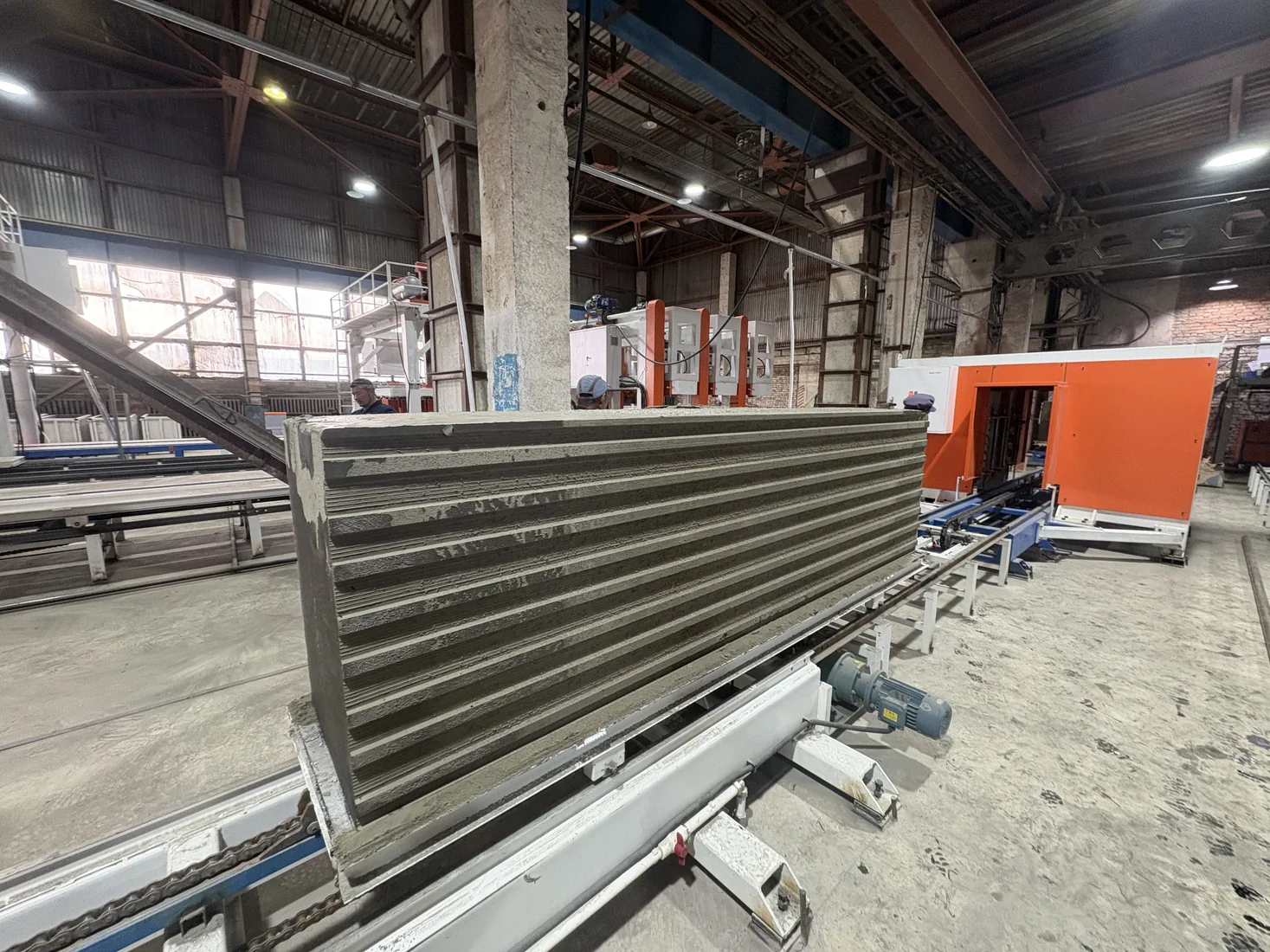
Demoulding equipment supports the long product while separating it from the mould. Downstream machines may cut the panel to length, create grooves or prepare connection details. The exact sequence follows the approved product drawing.
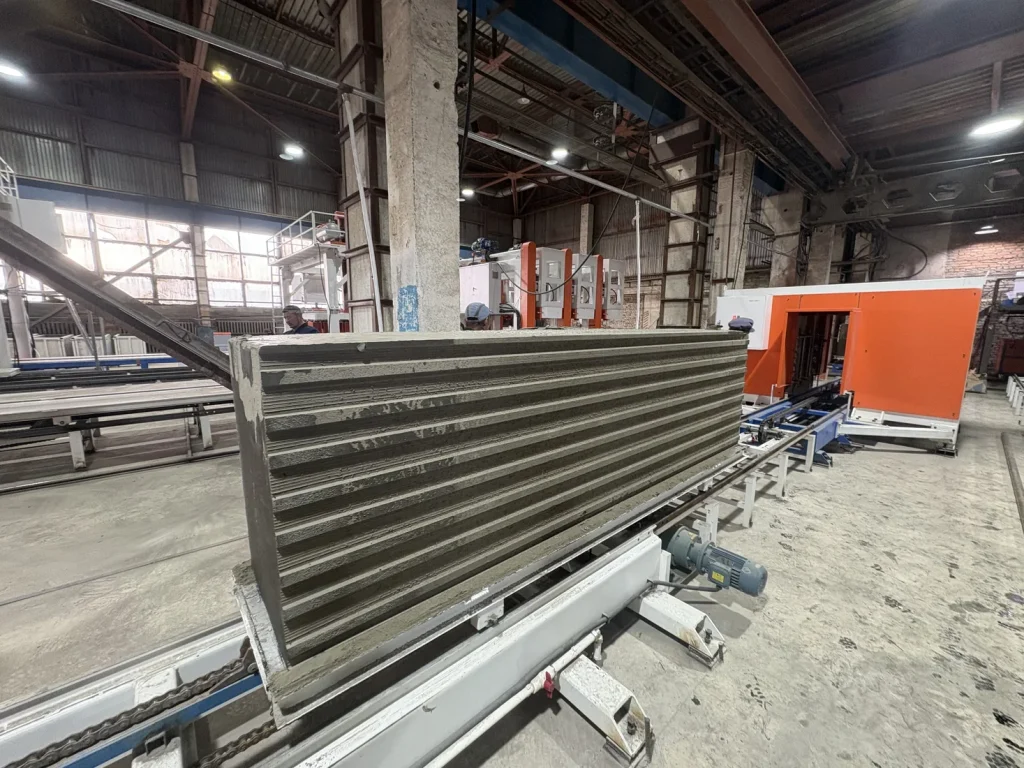
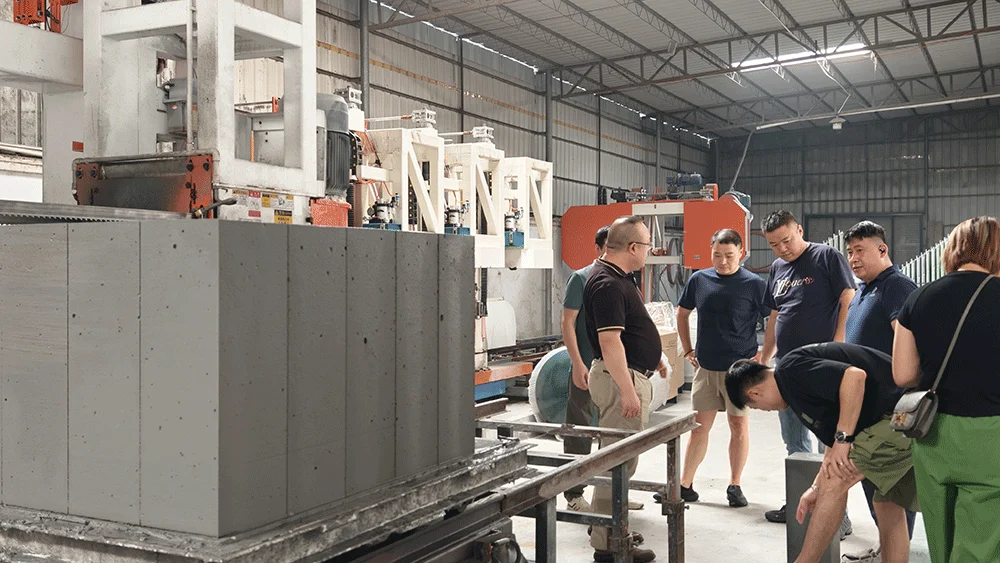
This real Mongolia project image shows HENGDE wall-panel grooving equipment. A grooving machine should be evaluated together with panel support, incoming transfer, dust or debris management and outgoing handling. See the multi-panel slotting machine for equipment-level information.
Handling and Stacking Finished Panels
Long panels require stable support during lifting, turning, transfer and stacking. Handling equipment must suit the panel dimensions and condition at that stage. The process should minimise edge impact and avoid point loads that can damage the product.
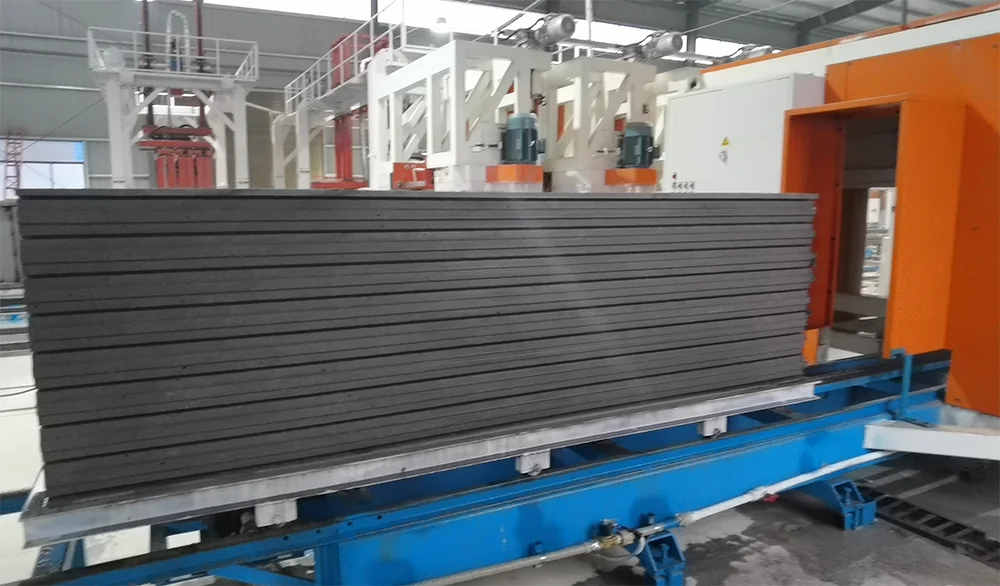
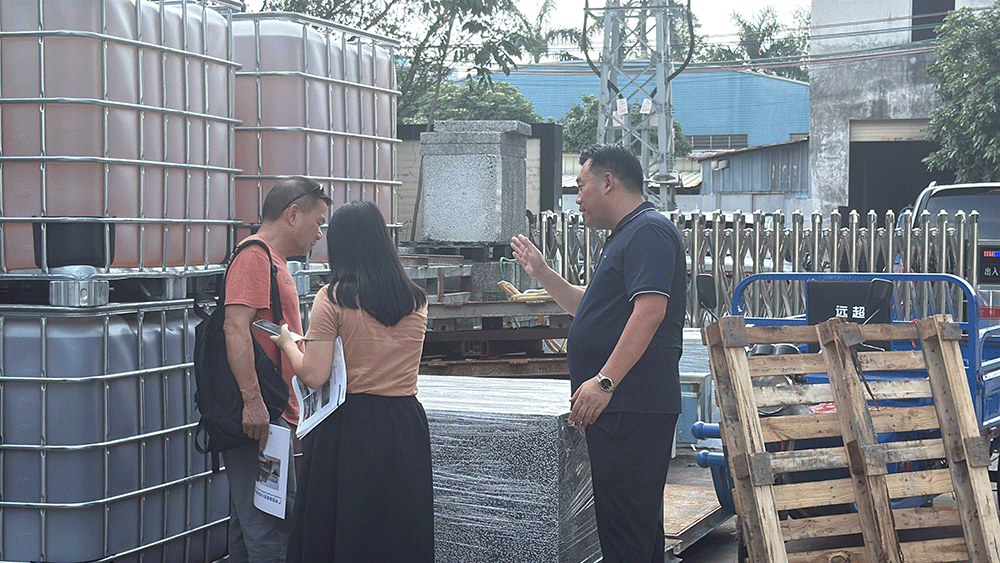
The finished products shown above are real HENGDE project media from Xianning. Production records and finished-product tests—not visual appearance alone—should confirm whether the panels meet the project specification.
Relevant downstream equipment includes the wall-panel clamp, wall-panel transfer car and connected stacking systems.
PLC Control and Process Checkpoints
PLC control can coordinate metering, mixing, mould movement, pouring and downstream equipment. Useful automation is based on defined process checkpoints and interlocks, not simply the presence of a touchscreen.
The control scope should identify sensors, controlled machines, alarm handling, authorised parameter changes and the responsibility for field cabling. Operators still need training in material checks, mould preparation, cleaning, quality records and safe manual intervention.
Key Questions and Next Steps
- Which panel dimensions and reinforcement design does the quotation support?
- Which material-preparation, foaming and mixing equipment is included?
- How many moulds are included and how do they circulate?
- What curing conditions and factory area are assumed?
- Which demoulding, cutting, grooving and handling operations are automatic?
- Which product tests and acceptance checks are the customer responsible for arranging?
- What civil works, utilities, lifting equipment and installation preparation are excluded?
The HENGDE lightweight wall panel production line page connects the route with real equipment and project evidence. You can also review the Ghana wall-panel project and the wider project library.
To receive a practical configuration, send the intended panel size, project country, raw materials and target output. HENGDE will review the information before recommending mould, mixing, finishing and handling scope.
Final capacity, process and equipment configuration require project-specific engineering verification.
REAL HENGDE REFERENCE
Equipment, project or engineering evidence
Planning a similar lightweight block production project?
Share your product, project location, target output and available materials with the HENGDE team.
Get a Production Line Proposal