How to Determine Lightweight Block Production Line Capacity
Management View — reviewed by the engineering and project-delivery team. The first number in many production-line discussions is also the number most likely to be misunderstood: capacity. A buyer asks for 100, 200 or 300 cubic metres. A supplier places a larger figure at the top of a quotation. Both sides feel that they have started with something concrete. In reality, they may still be talking about different things. Is the figure per shift, per eight hours or per calendar day? Does it describe mould volume, wet material, cut block volume or saleable finished product? Does it assume one shift or continuous operation? Does it…

Management View — reviewed by the engineering and project-delivery team.
A buyer asks for 100, 200 or 300 cubic metres. A supplier places a larger figure at the top of a quotation. Both sides feel that they have started with something concrete. In reality, they may still be talking about different things.
Is the figure per shift, per eight hours or per calendar day? Does it describe mould volume, wet material, cut block volume or saleable finished product? Does it assume one shift or continuous operation? Does it include cleaning, mould preparation, recipe changes, wire replacement, maintenance and normal rejects?
Until these questions are answered, capacity is not an engineering input. It is only a label.
The line can only move as fast as its slowest repeated step
A lightweight block factory is a chain of repeated cycles. Material preparation feeds metering. Metering feeds mixing and physical foaming.
Mixing feeds pouring. Pouring fills moulds. Moulds occupy initial-setting space.
The block body is demoulded and cut. Finished products then have to leave the cutting area before the next body arrives.
The practical throughput of the line cannot be greater than the sustainable throughput of its slowest essential stage.
One useful planning expression is:
saleable output = usable mould volume x completed qualified cycles x saleable yield
Each term has to be defined. Usable mould volume is not always the external box volume. Completed cycles are not the same as the maximum speed of one machine. Saleable yield is not 100 percent simply because the line is new.
The production-capacity planning guide should therefore be read together with mould, curing, cutting and handling data, not as a stand-alone daily target.
Fast mixing does not create fast production
Mixing time is visible and easy to compare, so it often receives too much attention. A larger mixer may fill a mould quickly, but it cannot release that mould from the initial-setting period. If curing space and mould quantity are unchanged, faster mixing can simply create a longer queue.
The same problem appears downstream. A high-speed cutter cannot solve a block body that reaches cutting too soft, too hard or at inconsistent intervals. It may wait for material for half an hour and then receive two bodies almost together. The second body is not late because the cutter is slow; it is late because the upstream rhythm is unstable.
This is why mould-circulation equipment and handling and control equipment belong in the capacity calculation. They are not accessories added after the main machines are selected.
The hidden clock is often initial setting
In non-autoclaved lightweight concrete production, material condition changes with time. The block body has to gain enough stability for demoulding and cutting without being held so long that cutting becomes difficult or the process loses rhythm.
That window is affected by the actual cement, fines, water, foam system, temperature, product density and recipe. A cycle time copied from another factory is therefore a hypothesis, not a guarantee.
If the setting window varies, mould occupation varies. If mould occupation varies, the number of cycles per shift varies. A capacity plan that ignores this variation may look balanced on a drawing and fail in daily operation.
The correct response is not to hide the uncertainty. It is to test the local materials, define a working process window and then size the mould circulation and buffer positions around evidence.
Cutting capacity must be expressed as a complete cycle
A cutting machine has several time components: receiving the body, positioning, cutting, surface removal where applicable, releasing the product, clearing the station and preparing for the next body. The usable cycle is the complete repeated sequence, not the time when the wires are moving.
Finished-product requirements also matter. A line making a limited set of standard blocks has a different changeover pattern from a line switching dimensions frequently. A clean, fast cut that damages the product during transfer does not create saleable output.
That is why a precision cutting system should be reviewed with billet condition, target dimensions, handling method and maintenance access.
A capacity proposal should show its assumptions
Before accepting a capacity figure, a buyer should ask for the basis behind it:
- What is the unit: per shift, per eight hours or per day?
- What product and density range is assumed?
- What mould size and usable fill volume are used in the calculation?
- How many moulds and buffer positions are included?
- What initial-setting window is assumed, and from which material trials?
- What is the complete cutting cycle?
- How many operators and shifts are assumed?
- Which cleaning, changeover and routine-maintenance periods are included?
- Is the figure formed volume, cut volume or saleable output?
- Which stage becomes the first bottleneck if the buyer later increases output?
A serious answer may contain ranges and conditions. That is not weakness. It is more useful than a precise number built on invisible assumptions.
Our management view
We do not think the best production line is the line with the largest number on the first page of the proposal. It is the line whose stages can repeat the same rhythm under the buyer’s real materials, factory, labour and maintenance conditions.
Capacity should be traceable from mould volume to cycles, from cycles to process windows, and from process windows to saleable product. When that logic is visible, the buyer can see where future expansion should happen. When it is hidden, every later delay becomes an argument about which machine is responsible.
If you are planning a CLC block factory, send the target product, local raw materials, planned shifts, available workshop dimensions and required output through the initial line-review form. The first discussion should define the capacity basis before it defines the machine list.
Final capacity, process and equipment configuration require project-specific engineering verification.
REAL HENGDE REFERENCE
Equipment, project or engineering evidence
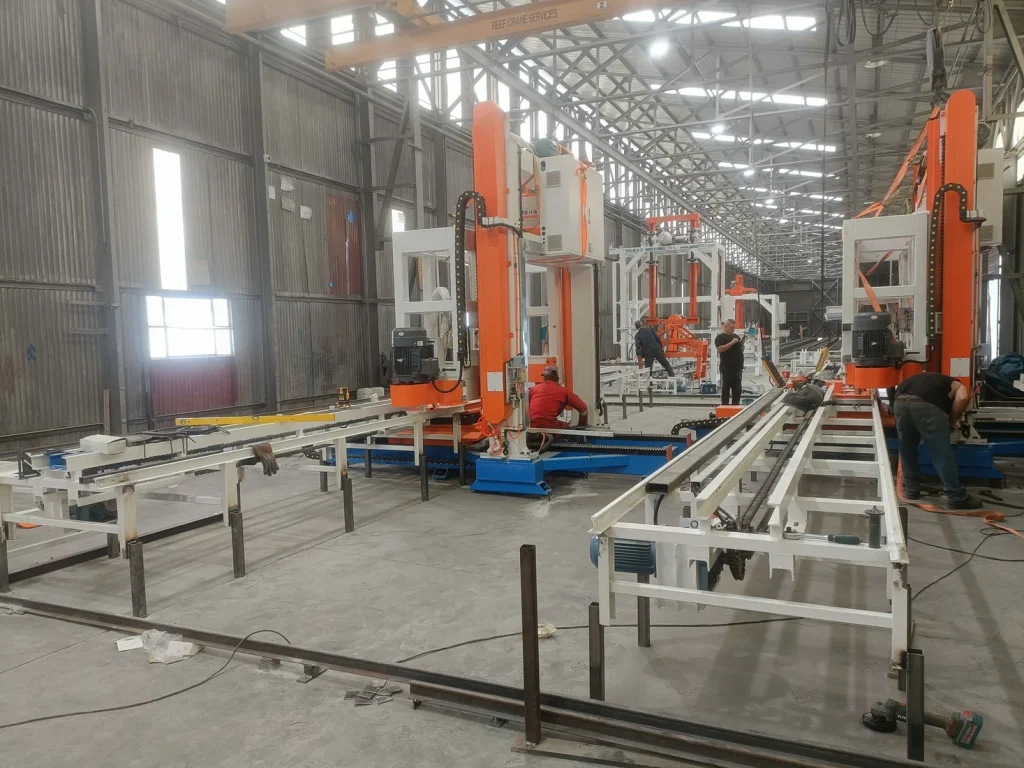
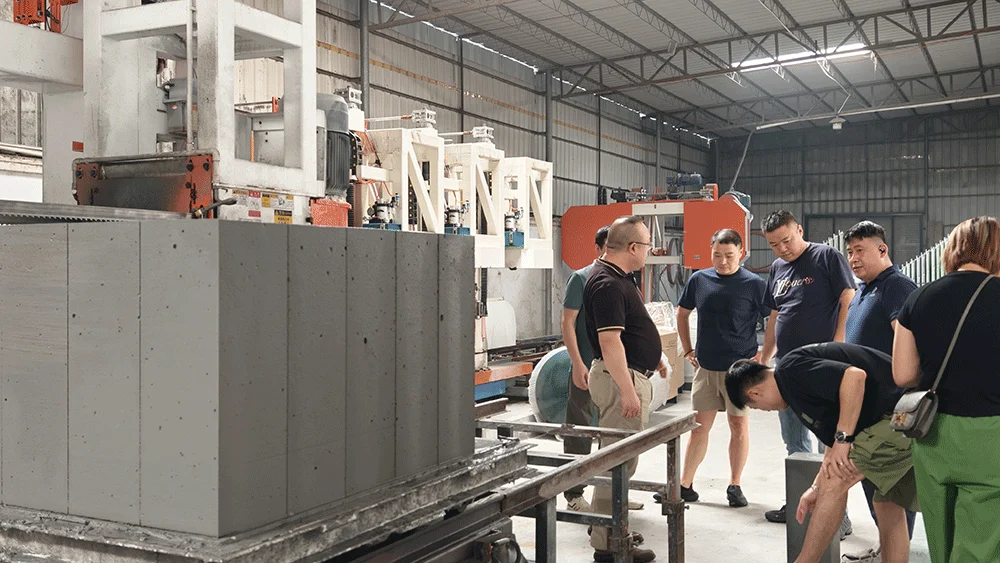
The real HENGDE media shown in the article Hero is the primary visual reference for this guide. Configuration details remain project-specific.
Discuss your production line project with HENGDE.
Share your product, project location, target output and available materials with the HENGDE team.
Discuss Your Project