How Indonesia’s Construction Growth Affects Lightweight Block Capacity Planning
Indonesia’s construction market is large enough to attract serious attention. BPS-Statistics Indonesia reported that construction was the country’s fourth-largest economic sector and contributed about 9.83{bb1ceb109b1187c2032fca65d2b3a1895c7643f112f94f5c3dd2be8db9d3ca2d} of GDP in 2025. At the same time, Indonesia lists SNI 8640:2018, a national specification for lightweight masonry units, as being in force. Those are useful signals. They are not, however, a production-capacity calculation. From a plant investor’s point of view, the most expensive mistake is to translate a national market headline directly into a large equipment order. A market can be growing while a particular factory still struggles with the wrong product size, an unreliable sand source, a long…
Indonesia’s construction market is large enough to attract serious attention. BPS-Statistics Indonesia reported that construction was the country’s fourth-largest economic sector and contributed about 9.83{bb1ceb109b1187c2032fca65d2b3a1895c7643f112f94f5c3dd2be8db9d3ca2d} of GDP in 2025. At the same time, Indonesia lists SNI 8640:2018, a national specification for lightweight masonry units, as being in force.
Those are useful signals. They are not, however, a production-capacity calculation.
From a plant investor’s point of view, the most expensive mistake is to translate a national market headline directly into a large equipment order. A market can be growing while a particular factory still struggles with the wrong product size, an unreliable sand source, a long cement delivery cycle or an unfinished distributor network.
Start with the product that can actually be sold
“Lightweight blocks” is not one uniform product. A project must define the required density range, block dimensions, groove or flat-edge design, cutting tolerance and intended wall application. These choices affect mould size, cutting configuration, material consumption, curing rhythm and the way finished products are handled.
SNI 8640:2018 being in force is relevant because it gives the market a formal quality reference. It does not mean that a production line or a finished block is automatically certified. The investor still needs to identify the applicable local test items, sampling method and approval route for the target product.
Capacity should follow a verified sales rhythm
The right question is not, “How large is Indonesia’s construction sector?” It is, “How many cubic metres can this project sell, collect payment for and deliver every month?”
A practical forecast should separate confirmed demand, qualified opportunities and long-term market potential. It should also account for seasonal construction activity, distributor inventory, transport distance and the time needed to introduce a new wall material. A line sized only for the most optimistic month may sit underused; a line sized without an expansion path may become a bottleneck too early.
Hengde therefore recommends a base-capacity plan plus a defined expansion route. The civil layout, electrical allowance, material storage and transfer areas should leave room for the next step even if the initial investment is deliberately conservative.
Raw materials and utilities can change the answer
Two plants with the same sales target may require different configurations. Local cement behaviour, sand grading, fly ash or other mineral materials, water quality and foaming-agent compatibility all affect mixing, pumping, setting and cutting. Samples should be tested before the equipment configuration and process window are treated as final.
The same applies to utilities. Available power, water storage, compressed air, drainage and backup arrangements must be checked against the actual site. Port-to-site transport, container unloading and lifting access also belong in the capacity discussion because a line that cannot be installed or supplied reliably is not a complete production solution.
The general manager’s conclusion
Indonesia’s construction momentum supports further investigation of lightweight wall-material projects. It does not justify skipping project engineering.
Before selecting line size, Hengde asks an investor to bring four things to the table: a target product specification, a realistic monthly sales plan, representative local raw-material samples and a usable site drawing. With those inputs, capacity becomes an engineering decision rather than a guess based on a market headline.
For a structured comparison, see Hengde’s production-capacity planning guide or contact the project team with your product, raw-material and site information.
Sources
- BPS-Statistics Indonesia — Construction Indicators, 4th Quarter 2025
- National Standardization Agency of Indonesia — SNI 8640:2018 status
Editorial note: Market data is used as planning context, not as a forecast of orders or project returns.
Final capacity, process and equipment configuration require project-specific engineering verification.
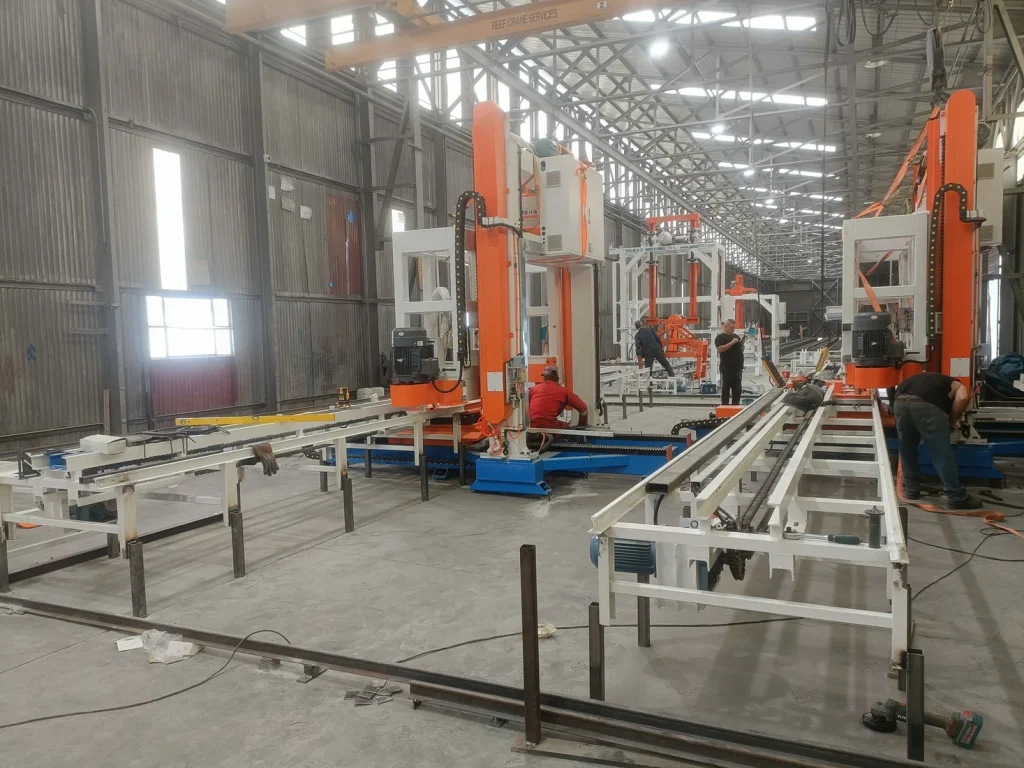
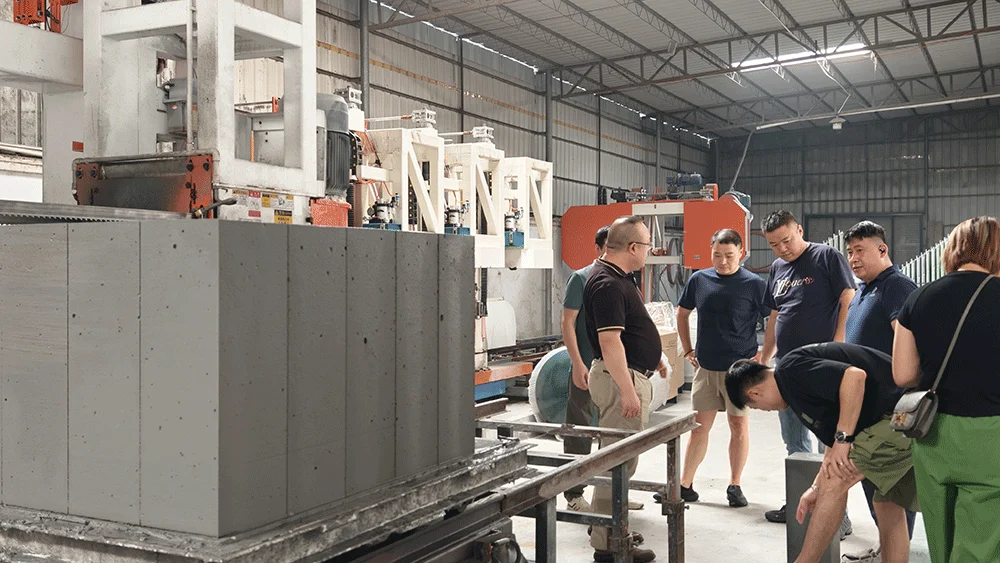
REAL HENGDE REFERENCE
Equipment, project or engineering evidence
The real HENGDE media shown in the article Hero is the primary visual reference for this guide. Configuration details remain project-specific.
Discuss your production line project with HENGDE.
Share your product, project location, target output and available materials with the HENGDE team.
Discuss Your Project