
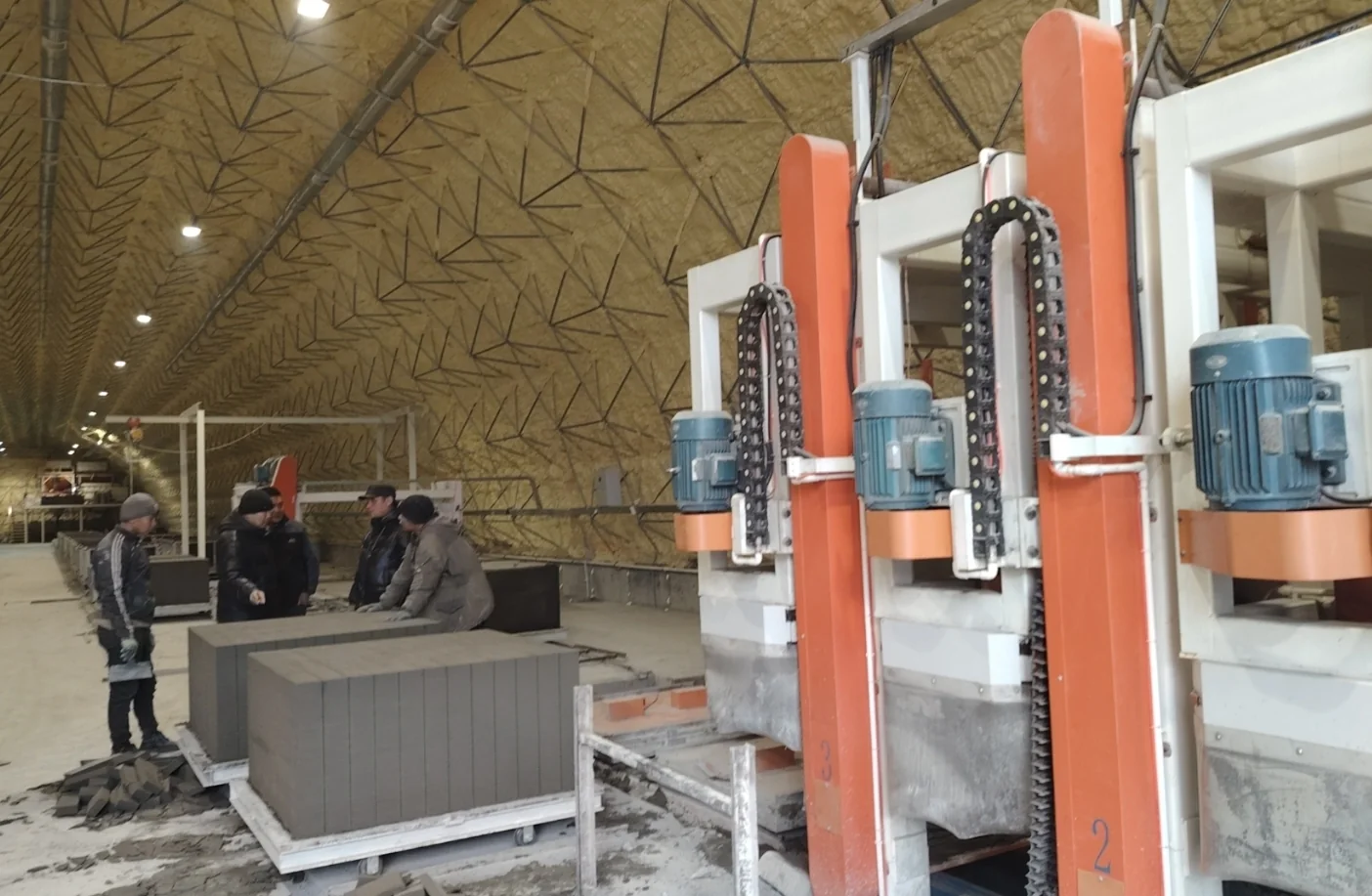
 Bishkek, Kyrgyzstan
 Bishkek NAAC block line with a 100–200 m³/day project range
- Product
- NAAC lightweight blocks
- Capacity
- 100–200 m³/day planning range
- Project Stage
- Production media available
CHEMICAL AERATION ROUTE
NAAC uses a chemically aerated, non-autoclaved route with project-specific material preparation, dosing, mixing, moulding, curing and finishing.
 Open original image
SIX-STEP PROCESS
Confirm raw-material suitability, then meter powders and water.
Dose the confirmed aerating system and control the project mixing sequence.
Control batch sequence and pour into the confirmed mould system.
Cure without an autoclave under the project temperature and time controls.
Demould and apply the confirmed cutting or finishing scope.
Transfer finished blocks through the approved handling sequence.
PRODUCTION LINE GALLERY
Drag or swipe through real equipment photos and engineering layouts. Open the main image to inspect it at full size.
CONFIRMED EQUIPMENT SCOPE
Measures the confirmed powder input for each production batch.
View device detail → Preparation & meteringStores and releases the confirmed water quantity for the controlled batch.
View device detail → Chemical aeration & mixingCombines the confirmed solids, water and route-specific lightweight constituent according to the approved batch sequence.
View device detail → PLC, electrical & toolingForms the listed panel or block billet; final geometry follows the confirmed product.
View device detail → PLC, electrical & toolingCoordinates the confirmed line sequence, interlocks, commands and alarms.
View device detail →PROJECT DELIVERY / TURNKEY SUPPORT
A factory proposal connects the project country, raw materials, target product and capacity, product dimensions, factory land, utilities, budget and automation requirement. The service and supply responsibilities are agreed for each project.
Evaluate representative samples from the project location before selecting the final process.
Adjust the formulation and material ratios against the test results and target product.
Confirm product dimensions and the product-specific preparation, forming, curing and finishing process.
Coordinate land, buildings, storage, material flow, foundations and utilities.
Match capacity, automation, budget, moulds and process interfaces to the agreed factory scope.
Prepare the agreed machines, tooling and controls against the approved configuration.
Check applicable equipment and delivery scope before shipment.
Coordinate packing, loading and destination requirements with the project shipping plan.
Install and connect the agreed equipment after site conditions are ready.
Check machine sequences and trial production with the selected materials.
Train operators in safe use, production sequence and routine maintenance.
Plan maintenance communication and spare-parts support for the installed equipment.
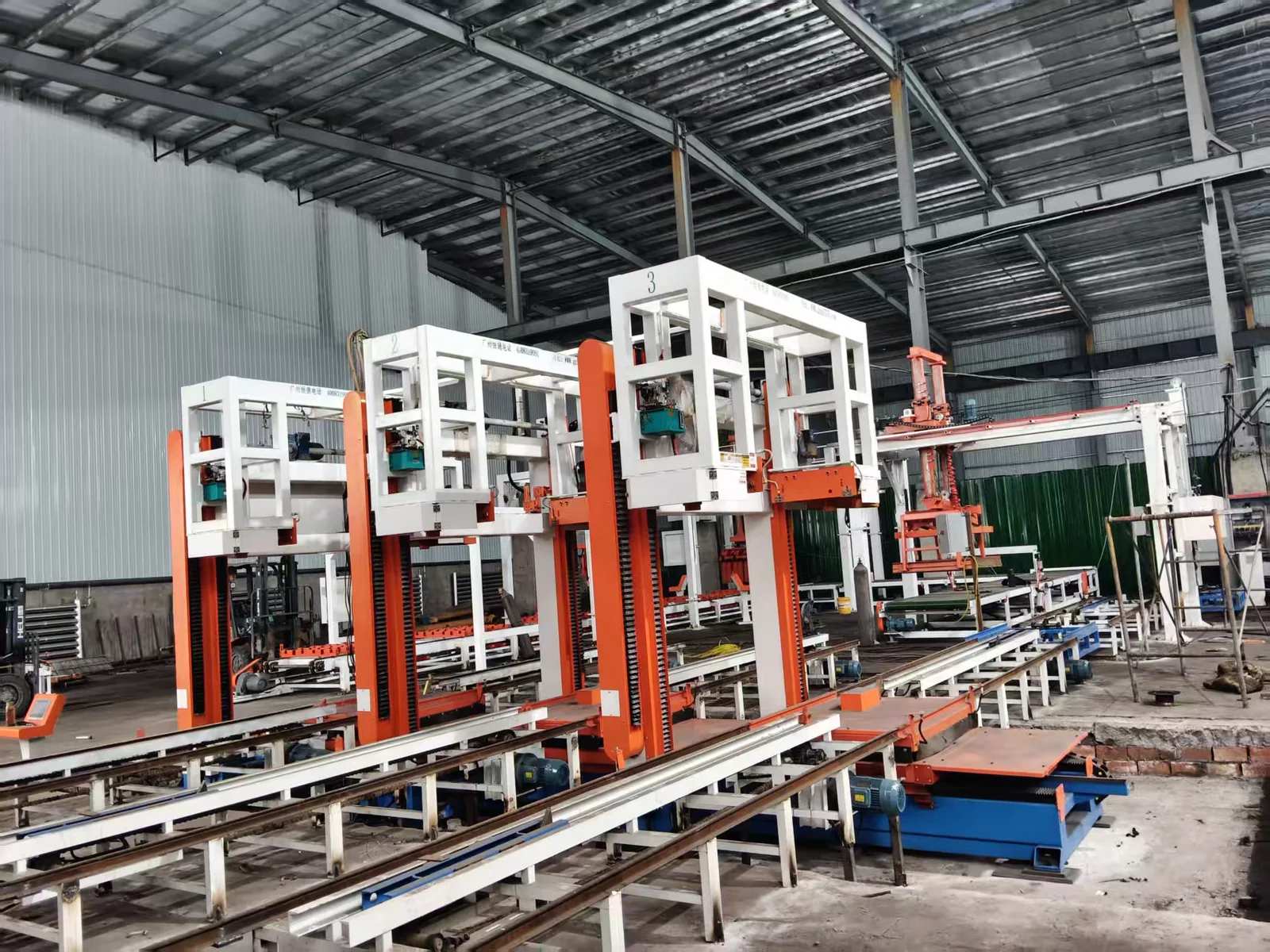
REAL HENGDE PROJECTS
HENGDE projects selected by product family, process route, capacity and current delivery stage.
Bishkek, Kyrgyzstan 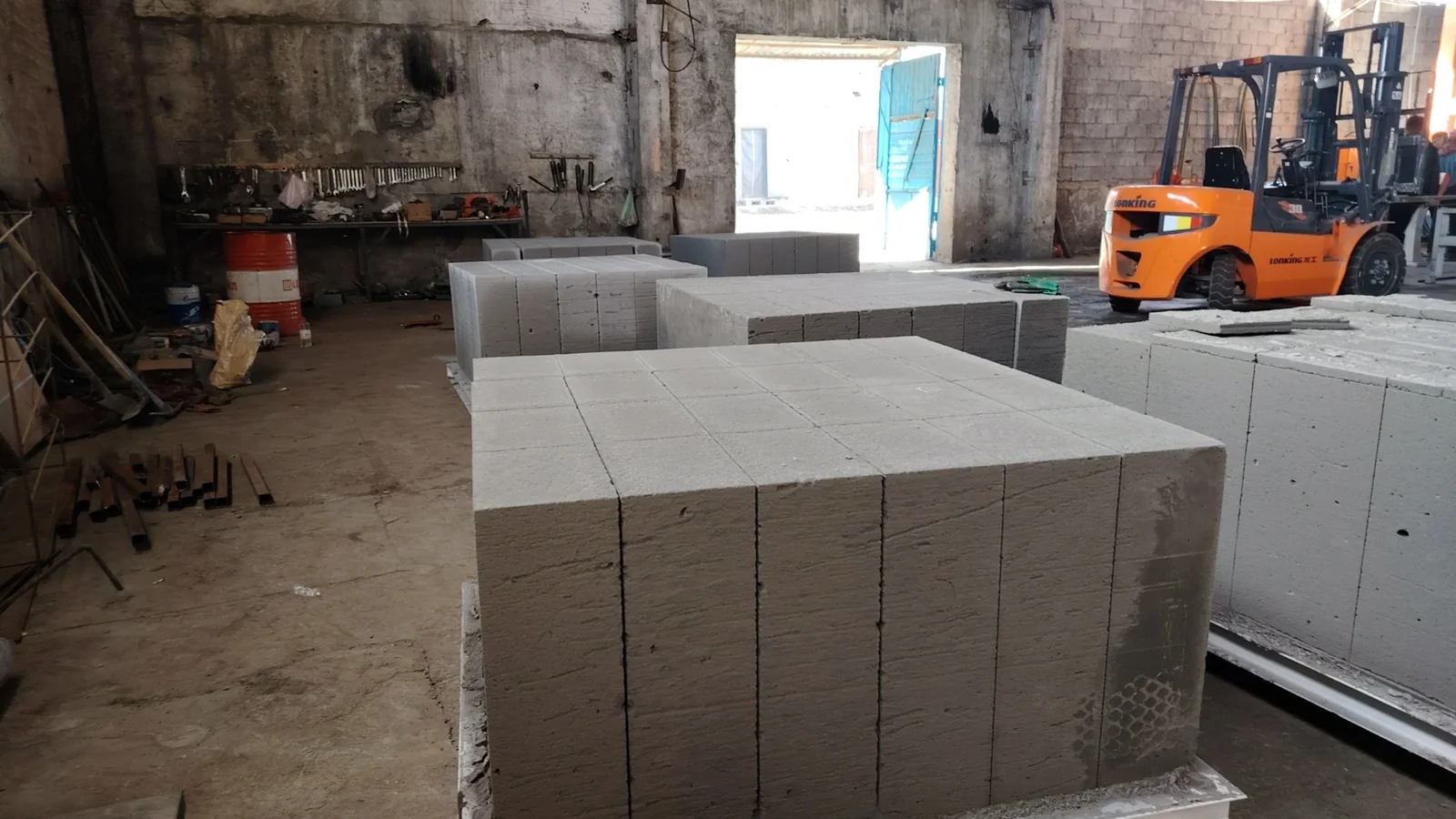 Jaiyl, Kyrgyzstan
 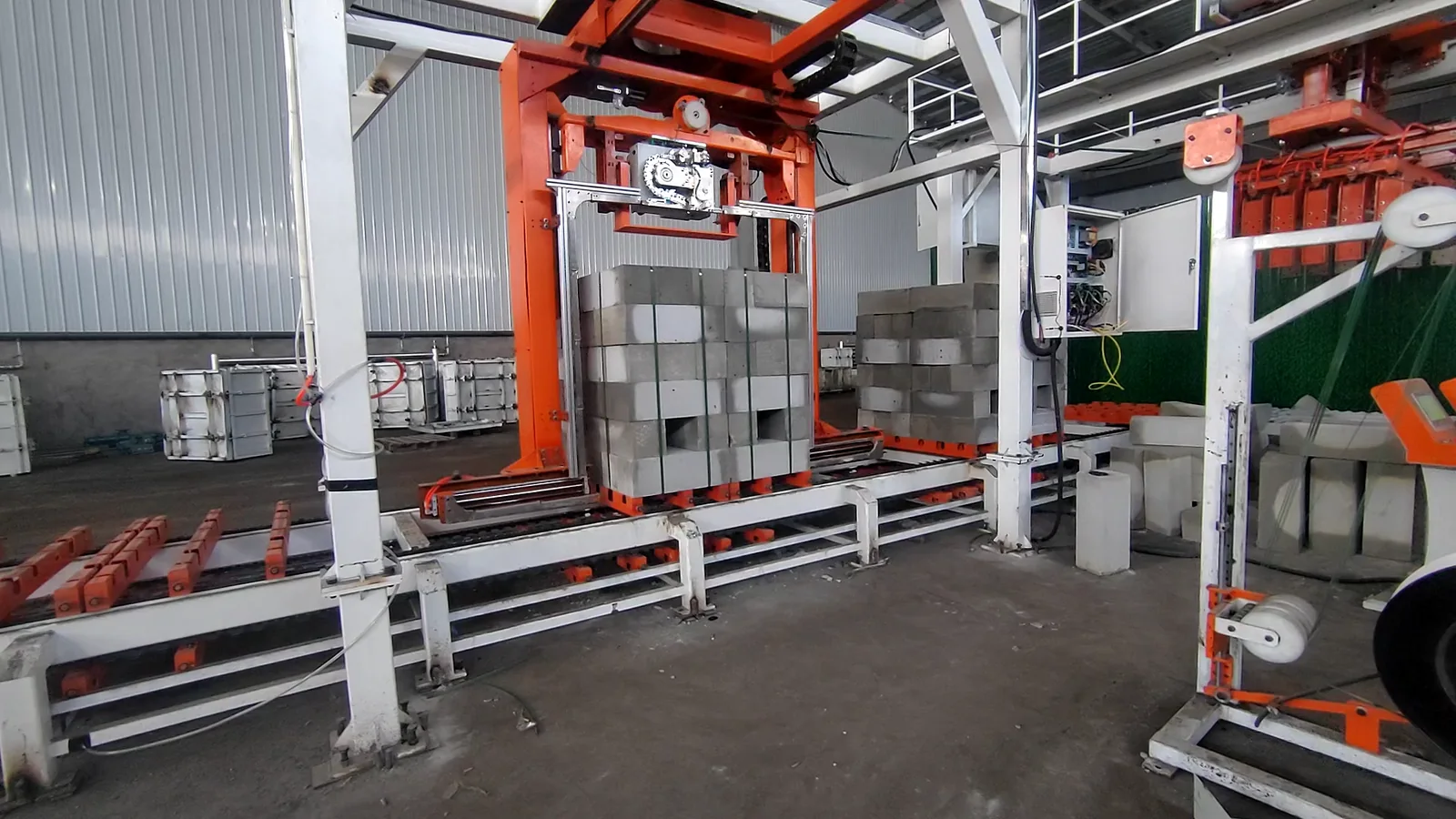 Ordos, Inner Mongolia, China
 Share your target product, required output and factory location for a suitable equipment proposal.
The reviewed HENGDE NAAC route uses chemical aeration with non-autoclaved curing. Material categories and equipment follow the confirmed NAAC engineering data.
Review the confirmed cementitious and siliceous materials, water and project chemical-aeration input before equipment selection.
Lime, gypsum and aluminium powder are included only where the reviewed NAAC engineering route specifies them.
Test results guide dosing, mixing sequence, temperature controls, mould filling and expansion behaviour.
Non-autoclaved curing, demoulding and finishing conditions are confirmed for the selected block and local materials.
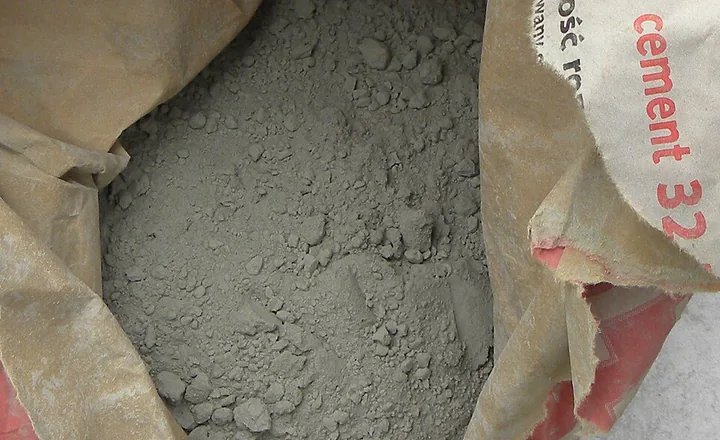
Sampling and project-specific review required.
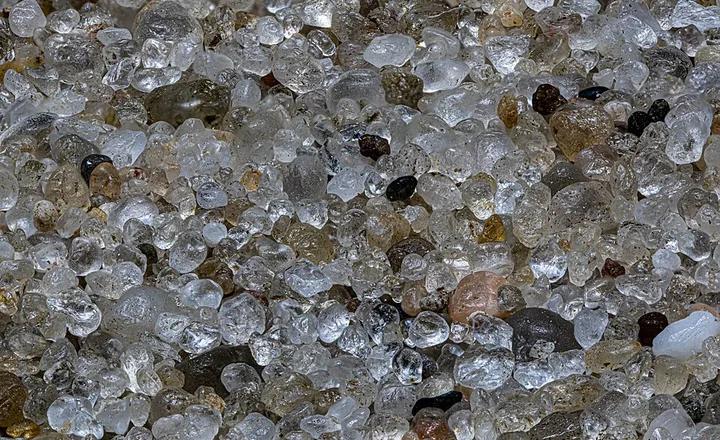
Sampling and project-specific review required.
Sampling and project-specific review required.
Sampling and project-specific review required.
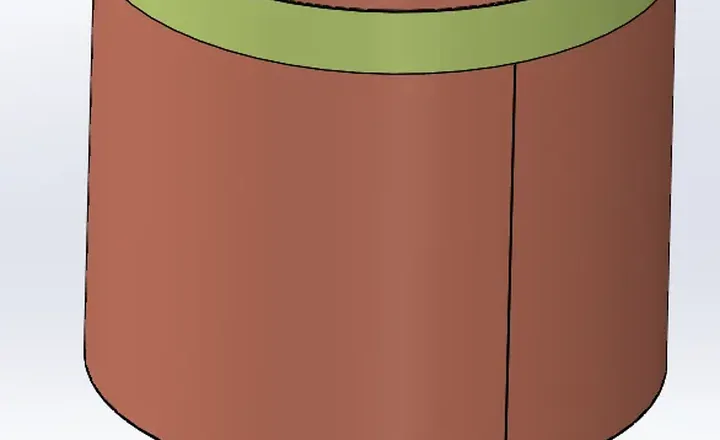
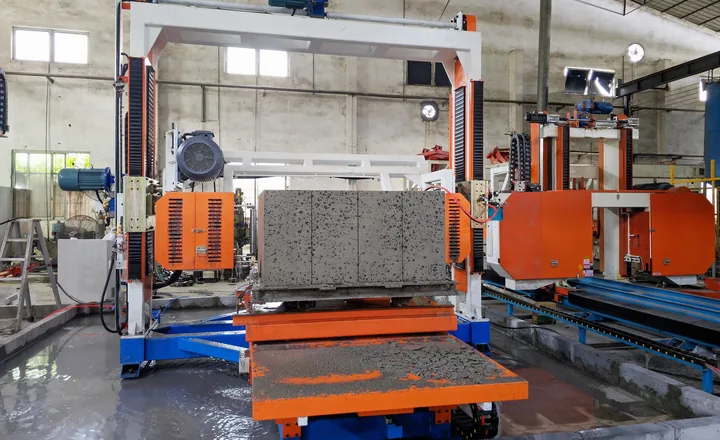
Sampling and project-specific review required.
A planned collection and settling loop can reduce uncontrolled slurry discharge and recover process water. The exact civil works, pump selection and reuse rate depend on the project layout and tested material system.
Raw-material availability varies by country. Send HENGDE your local material information before the final production-line configuration is confirmed.
Representative material photographs: cement, Szlomo Lejb / Sumek101; river sand, Krzem Anonim; fly ash, Ablazejo. Licensed under applicable CC BY-SA / GFDL terms. HENGDE project and testing photographs are identified separately.